IBD Specialist Australia

IBD Specialist Australia

Crohn's Disease & Ulcerative Colitis Support

Identify the bacterial imbalances driving your inflammation. Reduce flare-ups. Support your path to remission—whether you're working with a gastroenterologist or seeking a new approach.

Identify the bacterial imbalances driving your inflammation. Reduce flare-ups. Support your path to remission—whether you're working with a gastroenterologist or seeking a new approach.

Watch how microbiome testing helps IBD (5 min)

Watch this video to see
how we can help (5 min)

Trusted by 2,000+ Australians

Trusted by 2,000+ Australians

Microbiologist & Naturopath Team

Microbiologist & Naturopath Team

Root Cause Resolution

Root Cause Resolution

When medication manages symptoms but doesn't stop the cycle

When medication manages symptoms but doesn't stop the cycle

Living with Crohn's disease or ulcerative colitis doesn't mean you're stuck with endless medication and unpredictable flare-ups. Our AIM Method combines comprehensive testing to identify bacterial imbalances, personalised protocols to restore gut health, and ongoing monitoring to support lasting remission.


We work with IBD clients at every stage: newly diagnosed, managing flares, in remission, experiencing medication side effects, or looking for complementary support alongside your medical care.


If you're living with Crohn's disease or ulcerative colitis, you know the exhausting pattern: medication manages inflammation for a while, then symptoms creep back. You adjust the dose or switch medications. You have good months and bad months. You plan your life around bathroom access.


You may have been told that lifelong medication is your only option. And while biologics, immunosuppressants, and corticosteroids have helped millions of people manage IBD, they often come with trade-offs:


  • Unpredictable flare-ups despite medication

  • Side effects that affect your quality of life

  • Concern about long-term medication dependency

  • Weight loss or difficulty maintaining weight (especially with Crohn's)

  • Ongoing bleeding, urgency, or pain (especially with ulcerative colitis)

  • The sense that you're managing symptoms but not addressing root causes


Here's what most IBD patients don't realise: your gut microbiome plays a critical role in IBD inflammation and remission - and standard medical care rarely assesses it.


While biologics suppress immune response and reduce inflammation, they don't restore the bacterial balance your gut needs to heal. They don't rebuild the protective species that keep inflammation in check. They don't address why your immune system is attacking your gut in the first place.


That's where our complete approach comes in - comprehensive testing to identify bacterial imbalances, personalised protocols to restore balance, and ongoing support to help you achieve lasting remission.

Living with Crohn's disease or ulcerative colitis doesn't mean you're stuck with endless medication and unpredictable flare-ups. Our AIM Method combines comprehensive testing to identify bacterial imbalances, personalised protocols to restore gut health, and ongoing monitoring to support lasting remission.


We work with IBD clients at every stage: newly diagnosed, managing flares, in remission, experiencing medication side effects, or looking for complementary support alongside your medical care.


If you're living with Crohn's disease or ulcerative colitis, you know the exhausting pattern: medication manages inflammation for a while, then symptoms creep back. You adjust the dose or switch medications. You have good months and bad months. You plan your life around bathroom access.


You may have been told that lifelong medication is your only option. And while biologics, immunosuppressants, and corticosteroids have helped millions of people manage IBD, they often come with trade-offs:


  • Unpredictable flare-ups despite medication

  • Side effects that affect your quality of life

  • Concern about long-term medication dependency

  • Weight loss or difficulty maintaining weight (especially with Crohn's)

  • Ongoing bleeding, urgency, or pain (especially with ulcerative colitis)

  • The sense that you're managing symptoms but not addressing root causes


Here's what most IBD patients don't realise: your gut microbiome plays a critical role in IBD inflammation and remission - and standard medical care rarely assesses it.


While biologics suppress immune response and reduce inflammation, they don't restore the bacterial balance your gut needs to heal. They don't rebuild the protective species that keep inflammation in check. They don't address why your immune system is attacking your gut in the first place.


That's where our complete approach comes in - comprehensive testing to identify bacterial imbalances, personalised protocols to restore balance, and ongoing support to help you achieve lasting remission.

Living with Crohn's disease or ulcerative colitis doesn't mean you're stuck with endless medication and unpredictable flare-ups. Our AIM Method combines comprehensive testing to identify bacterial imbalances, personalised protocols to restore gut health, and ongoing monitoring to support lasting remission.


We work with IBD clients at every stage: newly diagnosed, managing flares, in remission, experiencing medication side effects, or looking for complementary support alongside your medical care.


If you're living with Crohn's disease or ulcerative colitis, you know the exhausting pattern: medication manages inflammation for a while, then symptoms creep back. You adjust the dose or switch medications. You have good months and bad months. You plan your life around bathroom access.


You may have been told that lifelong medication is your only option. And while biologics, immunosuppressants, and corticosteroids have helped millions of people manage IBD, they often come with trade-offs:


  • Unpredictable flare-ups despite medication

  • Side effects that affect your quality of life

  • Concern about long-term medication dependency

  • Weight loss or difficulty maintaining weight (especially with Crohn's)

  • Ongoing bleeding, urgency, or pain (especially with ulcerative colitis)

  • The sense that you're managing symptoms but not addressing root causes


Here's what most IBD patients don't realise: your gut microbiome plays a critical role in IBD inflammation and remission - and standard medical care rarely assesses it.


While biologics suppress immune response and reduce inflammation, they don't restore the bacterial balance your gut needs to heal. They don't rebuild the protective species that keep inflammation in check. They don't address why your immune system is attacking your gut in the first place.


That's where our complete approach comes in - comprehensive testing to identify bacterial imbalances, personalised protocols to restore balance, and ongoing support to help you achieve lasting remission.

See how we fix IBD
(5 min)

WATCH NOW

Book your free 15-minute evaluation call

BOOK FREE CALL

Our approach: The AIM Method™ for IBD

Our approach: The AIM Method™ for IBD

At Prana Thrive, we don't just test and send you a report. We guide you through complete healing using our AIM Method:


Analyse — Comprehensive metagenomic testing identifies which bacterial species are driving your inflammation (depleted protective species, elevated inflammatory bacteria, reduced diversity).


Integrate — Personalised protocols restore bacterial balance through targeted antimicrobials, specific probiotics, gut barrier repair, and anti-inflammatory dietary strategies.


Monitor — Ongoing support for 3–6 months with regular check-ins, protocol adjustments, and retesting to ensure you achieve and maintain remission.


Testing alone is just expensive data. Our complete approach is what creates results.


Let's look at what the testing reveals - and how we use that information to create your personalised protocol.

The bacterial patterns that drive IBD inflammation

The bacterial patterns that drive IBD inflammation

Research has identified specific bacterial imbalances consistently found in people with Crohn's disease and ulcerative colitis. These patterns aren't random - they directly contribute to intestinal inflammation, barrier breakdown, and immune dysregulation.

The IBD Microbiome Signature

What We Consistently See in IBD:


Depleted Protective Species:


  • Faecalibacterium prausnitzii — A keystone anti-inflammatory species that produces butyrate (the primary fuel for intestinal cells). Studies show F. prausnitzii is severely depleted in Crohn's disease and low levels predict relapse.

  • Akkermansia muciniphila — Supports intestinal barrier integrity and mucus layer health. Often depleted in both Crohn's and UC.

  • Other butyrate-producers — Species that produce short-chain fatty acids (SCFAs) that reduce inflammation and support gut healing.


Elevated Inflammatory Species:


  • Adherent-Invasive E. coli (AIEC) — Found in up to 50% of Crohn's patients. This pathogenic E. coli strain invades intestinal cells and triggers chronic inflammation.

  • Fusobacterium nucleatum — Drives intestinal inflammation and is elevated in both Crohn's and UC.

  • Ruminococcus gnavus — Degrades the protective mucus layer, allowing bacteria to reach and inflame intestinal tissue.

  • Sulfate-reducing bacteria — Produce hydrogen sulfide, which damages the intestinal lining (particularly in UC).


Reduced Microbial Diversity:


  • IBD patients typically have significantly lower bacterial diversity than healthy individuals. This lack of diversity makes the microbiome less resilient and more vulnerable to inflammatory triggers.


The Result?


When protective species are depleted and inflammatory bacteria overgrow, your intestinal environment becomes chronically inflamed - even if you're eating well, managing stress, and taking medication.


This is why some IBD patients respond well to medication while others don't. Your microbiome composition affects how you respond to biologics, how quickly you achieve remission, and how likely you are to relapse.

🔬 THE MICROBIOLOGIST'S PERSPECTIVE ON IBD


"When I review microbiome results for IBD clients, the pattern is striking: severely depleted Faecalibacterium prausnitzii is almost universal in active Crohn's disease. This species produces butyrate, which is the primary fuel source for your colonocytes - the cells lining your intestine. Without adequate butyrate, your intestinal barrier can't maintain itself, leading to increased permeability and chronic inflammation.


On the other side, I consistently see elevated Adherent-Invasive E. coli in Crohn's patients and sulfate-reducing bacteria in ulcerative colitis. These aren't just 'imbalances' - these are specific bacterial species with known inflammatory mechanisms. AIEC actually invades your intestinal cells and triggers immune activation. Sulfate-reducing bacteria produce hydrogen sulfide that damages your gut lining.


The challenge is that standard medical testing doesn't assess these patterns. A colonoscopy shows inflammation, but it doesn't tell you which bacteria are driving it. Blood tests show elevated inflammatory markers, but they don't reveal the microbial imbalances causing them. That's why comprehensive testing matters - it shows what's actually happening at the bacterial level, so we can target the root causes."

Smiling woman
Smiling woman

Victoria Samios, Microbiologist

What Gastroenterology typically
doesn't address

What Gastroenterology typically doesn't address

Gastroenterologists are essential for diagnosing and managing IBD. Colonoscopies, biopsies, imaging, and medications save lives. But standard medical care has significant gaps—not because gastroenterologists aren't skilled, but because the system they work within has limitations.

What Gastroenterology does well

Diagnoses IBD through colonoscopy and biopsy

Monitors disease activity and mucosal healing

Prescribes medications to suppress inflammation

Screens for complications (strictures, fistulas, cancer)

Performs surgery when necessary

What's often missing

Microbiome assessment — Standard stool tests only screen for acute infections (C. difficile, salmonella). They don't assess your bacterial composition, diversity, or IBD-specific patterns like depleted F. prausnitzii or elevated AIEC.

Root cause investigation — Why did your immune system start attacking your gut? What triggered the initial inflammation? Most gastroenterologists don't have time (or tools) to investigate dietary triggers, early-life antibiotic exposure, stress, or microbiome disruption.

Personalized dietary guidance — You might be told to "avoid trigger foods" but without specific guidance on which foods feed beneficial bacteria vs. inflammatory species.

Medication reduction strategy — Once you're on biologics or immunosuppressants, there's rarely a plan to reduce or taper them - even if you achieve remission. The assumption is lifelong medication.

Proactive relapse prevention — Most care is reactive: wait for a flare, then escalate medication. There's limited focus on monitoring bacterial patterns that predict relapse before symptoms appear.

We Don't Replace Your Gastroenterologist - We Fill the Gaps


Many of our IBD clients work with both a gastroenterologist (for medication management and monitoring) and our team (for microbiome support, dietary protocols, and root cause investigation). Others come to us after exhausting medication options or experiencing intolerable side effects, seeking a different approach.


Either way, our role is to address what standard medical care doesn't: the bacterial imbalances driving your inflammation.

Every test result is personally analysed by Victoria, our in-house microbiologist. Victoria doesn't just validate automated reports—she identifies subtle markers, catches patterns that algorithms miss, and provides clinical context for your findings.


No other gut health clinic in Australia has a microbiologist reviewing every single test.


After Victoria's analysis, Amanda (our naturopath who's reviewed 2,000+ microbiome tests) creates your personalised healing protocol based on proven patterns and your unique results.


You're not handed a PDF and told "good luck." You're guided by two experts who understand exactly what your results mean and how to heal them.


Complete Support System - Not Just Testing


We don't sell tests separately because data without guidance rarely leads to healing.

Every program includes:

✓ Comprehensive testing (PCR or metagenomic sequencing)


✓ Dual expert review (Victoria + Amanda personally analyse your results)


✓ 60-90 minute results consultation explaining everything in plain English


✓ Step-by-step healing protocol specific to your results (not generic advice)


✓ Ongoing support through your 3-6 month healing journey


✓ Protocol adjustments as you progress


✓ Follow-up testing to confirm your gut has healed


You don't just get answers - you get results.

How we support IBD clients:
the Prana Thrive difference

How we support IBD clients: the Prana Thrive difference

1. Comprehensive Metagenomic Testing (Not Standard Stool Tests)


We use metagenomic sequencing - the same technology used in Australian IBD research trials. This identifies 200–800+ bacterial species, fungi, and functional pathways.


What this reveals:


  • Specific IBD-associated bacteria (AIEC, Fusobacterium, depleted F. prausnitzii)

  • Butyrate-producing capacity (critical for intestinal healing)

  • Inflammatory vs. anti-inflammatory bacterial ratios

  • Microbial diversity (a key predictor of remission)

  • Pathogenic overgrowths missed by standard tests


Standard pathology stool tests only screen for acute infections. They don't assess microbiome composition or IBD-specific patterns.


2. Dual Expert Review: Microbiologist + Naturopath


Your test results are reviewed by Victoria (microbiologist) and Amanda (naturopath with 2,000+ microbiome analyses), giving you:


Scientific accuracy — Victoria identifies specific bacterial imbalances and their inflammatory mechanisms


Clinical application — Amanda translates findings into personalised protocols


Evidence-based recommendations — No guesswork, no generic protocols

This dual-expert model means you get laboratory-grade precision combined with holistic, whole-person care.


3. Personalized Protocols Based on YOUR Bacterial Profile


We don't use generic IBD protocols. Your protocol is designed based on:


  • Your specific bacterial imbalances (which protective species are depleted, which inflammatory species are elevated)

  • Your IBD type (Crohn's vs. ulcerative colitis) and disease location

  • Your current medications and how they affect your microbiome

  • Your symptoms, dietary patterns, and health history

  • Your goals (achieving remission, reducing medication, preventing relapse)


4. We Work Alongside Your Medical Care (Not Against It)


We never ask you to stop medication or abandon your gastroenterologist. Instead, we work alongside your medical team to:


✅ Address root causes biologics don't target (bacterial dysbiosis, barrier dysfunction, SCFA depletion)


✅ Support medication reduction over time (with your gastroenterologist's approval)

✅ Provide dietary and lifestyle protocols that complement your medical treatment

✅ Monitor inflammation with non-invasive markers (faecal calprotectin, if appropriate)


Many of our IBD clients continue seeing their gastroenterologist while using our protocols to reduce flare frequency and, in some cases, reduce medication dependency.

🌿 THE NATUROPATH'S PERSPECTIVE


"After analysing over 2,000 microbiome tests, I've seen consistent patterns in IBD clients: severe depletion of butyrate-producing bacteria, elevated inflammatory species, and significantly reduced microbial diversity. But here's what I've also learned - every person's IBD is different.

Some Crohn's clients have elevated AIEC. Others have fungal overgrowth or parasite activity. Some UC clients have sulfate-reducing bacteria driving inflammation. Others have histamine intolerance patterns contributing to symptoms.


This is why I don't use generic protocols. A Crohn's patient with depleted F. prausnitzii needs targeted butyrate support and specific prebiotic fibres. A UC patient with elevated sulfate-reducing bacteria needs to avoid sulfur-rich foods and use different antimicrobials.


My goal isn't managing your IBD forever - it's helping you achieve remission and, where possible, reduce your reliance on medication. I've worked with clients who've gone from multiple flares per year to sustained remission for 18+ months. I've seen clients reduce biologics with their gastroenterologist's supervision. I've watched clients regain weight, eliminate bleeding, and get their lives back.


It doesn't happen overnight, but when you address the bacterial imbalances driving your inflammation - not just suppress the symptoms - real healing becomes possible."

Headshot of young woman in front of dark brick wall.

Amanda Ledwith, Naturopath

Standard IBD care vs. root cause support

Standard IBD care vs. root cause support

Feature

Feature

Feature

Standard

Gastroenterology

Standard

Gastroenterology

Standard

Gastroenterology

Prana Thrive

Approach

Prana Thrive

Approach

Prana Thrive

Approach

Focus

Focus

Focus

Suppress inflammation with medication

Suppress inflammation with medication

Suppress inflammation with medication

Identify and address bacterial imbalances driving inflammation

Identify and address bacterial imbalances driving inflammation

Identify and

address bacterial imbalances driving inflammation

Testing

Testing

Testing

Colonoscopy,

blood tests, standard

stool culture (acute infections only)

Colonoscopy,

blood tests, standard

stool culture (acute infections only)

Colonoscopy,

blood tests, standard

stool culture (acute infections only)

Comprehensive metagenomic

sequencing (200–800+ species, IBD-specific patterns)

Comprehensive metagenomic

sequencing (200–800+ species, IBD-specific patterns)

Comprehensive metagenomic

sequencing (200–800+ species, IBD-specific patterns)

Bacterial

Analysis

Bacterial

Analysis

Bacterial

Analysis

Not assessed

Not assessed

Not assessed

F. prausnitzii depletion, AIEC, Fusobacterium, butyrate capacity, microbial diversity

F. prausnitzii depletion, AIEC, Fusobacterium, butyrate capacity, microbial diversity

F. prausnitzii depletion, AIEC, Fusobacterium, butyrate capacity, microbial diversity

Diet

Strategy

Diet

Strategy

Diet

Strategy

"Avoid trigger foods" (general advice)

"Avoid trigger foods" (general advice)

"Avoid trigger foods" (general advice)

Personalized based

on bacterial profile

and food intolerances

Personalized based

on bacterial profile

and food intolerances

Personalized

based on bacterial

profile and food

intolerances

Medication

Approach

Medication

Approach

Medication

Approach

Lifelong medication assumed

Lifelong medication assumed

Lifelong medication assumed

Support reduction

over time (with gastroenterologist's approval)

Support reduction

over time (with gastroenterologist's approval)

Support reduction

over time (with gastroenterologist's approval)

Relapse

Prevention

Relapse

Prevention

Relapse

Prevention

Reactive

(wait for flare, then escalate medication)

Reactive

(wait for flare, then escalate medication)

Reactive

(wait for flare, then escalate medication)

Proactive

(monitor bacterial

patterns, adjust

protocols before

symptoms appear)

Proactive

(monitor bacterial

patterns, adjust

protocols before

symptoms appear)

Proactive

(monitor bacterial

patterns, adjust

protocols before

symptoms appear)

Goal

Goal

Goal

Symptom

management

Symptom

management

Symptom

management

Remission +

reduced medication dependency

Remission +

reduced medication dependency

Remission +

reduced

medication dependency

Our IBD protocol: The AIM Method™

How we help you heal IBS (The AIM Method™)

Unlike conventional approaches that just manage symptoms, our AIM Method™ addresses the root cause of your IBD and guides you to lasting healing.
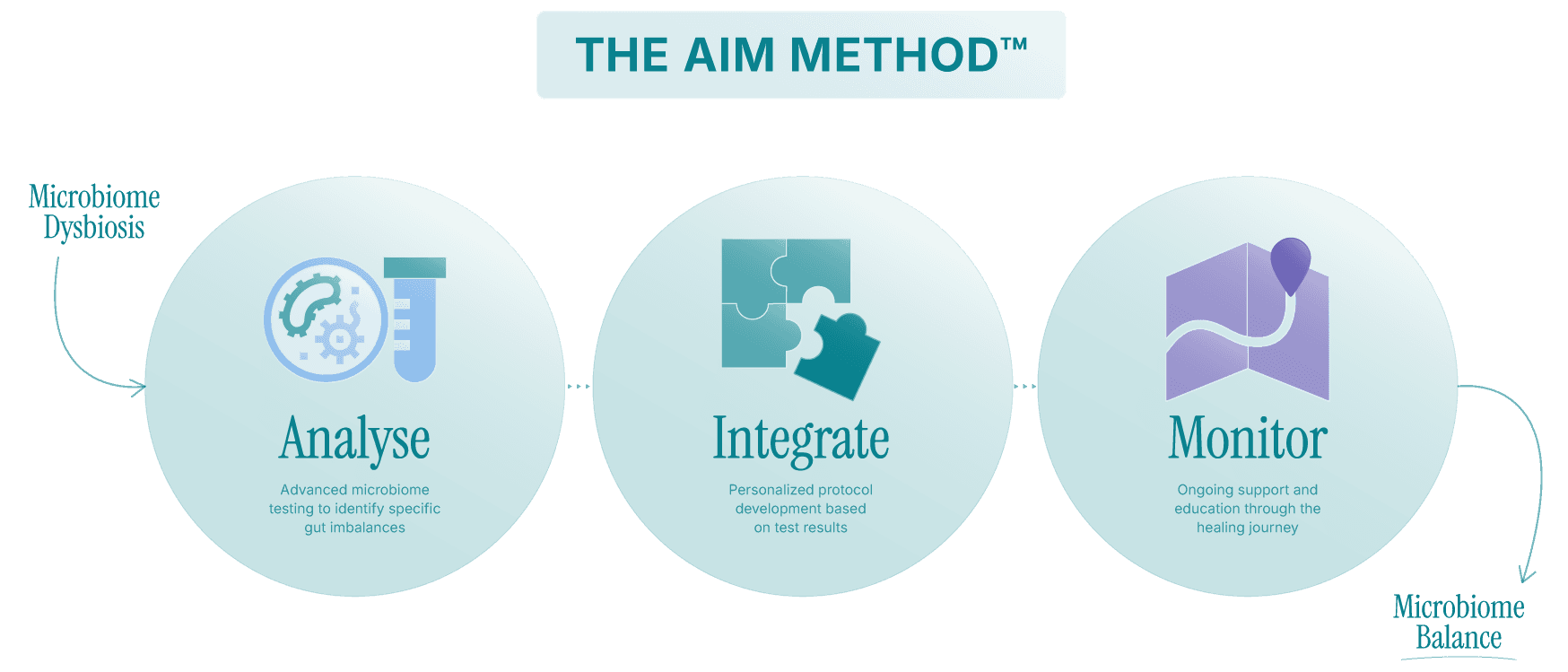
Analyse: Identify the Bacterial Imbalances


We use comprehensive metagenomic testing to identify:


  • Which protective species are depleted (F. prausnitzii, Akkermansia, butyrate-producers)

  • Which inflammatory species are elevated (AIEC, Fusobacterium, sulfate-reducing bacteria)

  • Your microbial diversity and functional capacity (SCFA production)

  • Any pathogenic overgrowths (fungi, parasites, pathogenic E. coli strains)


Victoria reviews every result to identify the specific bacterial patterns driving your IBD inflammation.

Integrate: Your personalised healing protocol


We build a protocol specific to your test findings and IBD type:


Reduce: Targeted antimicrobials to lower inflammatory bacteria (herbal or pharmaceutical, depending on severity)


Restore: Specific probiotic strains proven effective for IBD (e.g., VSL#3 for ulcerative colitis, Saccharomyces boulardii for Crohn's)


Repair: Support for gut barrier healing and butyrate production (L-glutamine, zinc carnosine, butyrate supplementation, prebiotic fibres)


Rebalance: Anti-inflammatory dietary protocols tailored to your bacterial profile and food intolerances

Monitor: Support long-term remission


We don't hand you a protocol and disappear. For 3–6 months, we provide:


  • Fortnightly or monthly check-ins to assess progress and adjust protocols

  • Symptom tracking and identification of patterns (food triggers, stress, medication changes)

  • Retest at 3–6 months to measure bacterial improvements and refine protocols

  • Support for medication tapering (if you and your gastroenterologist decide to reduce medication)

  • Ongoing relapse prevention strategies

See how we fix IBD
(5 min)

WATCH NOW

Book your free
IBS evaluation call

BOOK FREE CALL

We support IBD clients at every stage

We support IBD clients at every stage

You're an ideal candidate if:

You have Crohn's disease or ulcerative colitis (diagnosed by gastroenterologist)


You're experiencing flare-ups despite medication


You're dealing with medication side effects


You're struggling with weight loss or malnutrition (especially Crohn's)


You're experiencing ongoing bleeding, urgency, or pain (especially UC)


You're in remission and want to stay there


You're newly diagnosed and want to address root causes early


You want to work alongside your gastroenterologist with complementary support


You're looking for an alternative approach after medication hasn't worked

🤔 You may not need specialist support if:

You're currently in a severe flare requiring hospitalisation (stabilise first, then test)


You haven't been diagnosed with IBD yet (see a gastroenterologist first for diagnosis)


You're not ready to make dietary or lifestyle changes alongside testing


You're looking for a quick fix (IBD healing takes 3–6 months minimum)


Not sure if IBD specialist support is right for you?

Book a free 15-minute evaluation call - we'll give you honest guidance even if testing isn't the next step.

When root cause treatment changed everything

When root cause treatment changed everything

DMANJIT'S STORY

Background:
Damanjit was diagnosed with proctitis (a form of ulcerative colitis affecting the rectum) and experiencing mucus and blood in her stool—classic UC symptoms that were significantly affecting her quality of life.

The Process:

Working with Tracey (one of our practitioners), Damanjit received comprehensive microbiome testing and a personalised protocol targeting her specific bacterial imbalances. Tracey provided detailed explanations, customised monthly plans, and ongoing support throughout her healing journey.

The Outcome:

✅ Symptoms almost completely resolved

✅ No more blood or mucus in stool

✅ Sustained remission

"I've been with Prana Thrive since March and it's going really great. I was diagnosed with proctitis with symptoms of mucus and blood in stool. My naturopath Tracey helped me a lot to go through this. She has been amazing, patient, listened very patiently and provided me solutions and explained everything in detail with their customised monthly plans. It's been 9 months and my symptoms are almost gone and I'm going well. Thank you Tracey and Prana Thrive to make it till here ❤️"

"I've been with Prana Thrive since March and it's going really great. I was diagnosed with proctitis with symptoms of mucus and blood in stool. My naturopath Tracey helped me a lot to go through this. She has been amazing, patient, listened very patiently and provided me solutions and explained everything in detail with their customised monthly plans. It's been 9 months and my symptoms are almost gone and I'm going well. Thank you Tracey and Prana Thrive to make it till here ❤️"

"I've been with Prana Thrive since March and it's going really great. I was diagnosed with proctitis with symptoms of mucus and blood in stool. My naturopath Tracey helped me a lot to go through this. She has been amazing, patient, listened very patiently and provided me solutions and explained everything in detail with their customised monthly plans. It's been 9 months and my symptoms are almost gone and I'm going well. Thank you Tracey and Prana Thrive to make it till here ❤️"

JARROD'S STORY

Background:

Before working with Amanda, Jarrod was in a dire situation: chronically underweight at only 45kg, barely able to eat, and dealing with severe chronic gut issues. His health was deteriorating rapidly—a common pattern in Crohn's disease where inflammation and malabsorption make it nearly impossible to maintain weight.

The Process:

Amanda identified key bacterial imbalances through comprehensive microbiome testing and created a targeted protocol focused on reducing inflammation, improving nutrient absorption, and rebuilding protective bacterial species.

The Outcome:

 ✅ Gained 15kg (from 45kg to 60kg)—a massive achievement

✅ Able to eat normally again without fear

✅ Chronic gut issues resolved

✅ Overall health restored

"Amanda was wonderful to work with. Just before working with her, I was in a dire situation, chronically underweight at only 45kgs, barely able to eat, chronic gut issues and overall poor health. With Amanda's guidance on supplements and identifying key issues in my gut microbiome, she helped get my overall health back on track as well as regain a healthy weight (currently 60kgs). I am truly grateful for her services and highly recommend her to anyone who needs assistance with their gut health."

"Amanda was wonderful to work with. Just before working with her, I was in a dire situation, chronically underweight at only 45kgs, barely able to eat, chronic gut issues and overall poor health. With Amanda's guidance on supplements and identifying key issues in my gut microbiome, she helped get my overall health back on track as well as regain a healthy weight (currently 60kgs). I am truly grateful for her services and highly recommend her to anyone who needs assistance with their gut health."

"Amanda was wonderful to work with. Just before working with her, I was in a dire situation, chronically underweight at only 45kgs, barely able to eat, chronic gut issues and overall poor health. With Amanda's guidance on supplements and identifying key issues in my gut microbiome, she helped get my overall health back on track as well as regain a healthy weight (currently 60kgs). I am truly grateful for her services and highly recommend her to anyone who needs assistance with their gut health."

Read more client success stories

Ready to find out what's driving your IBD?

Ready to find out what's driving your IBD?

Our AIM Method combines comprehensive testing to analyse your bacterial imbalances, a personalised protocol to restore balance, and ongoing monitoring to support long-term remission.

Book Your Free IBD Evaluation Call

Book Your Free IBD Evaluation Call

BOOK FREE CALL

No pressure. No obligation.
Just clarity on what's actually causing your IBD and whether our comprehensive testing with expert support can help.

Australia-wide
IBD specialist service

Australia-wide
IBD specialist service

We're based in Perth, Western Australia, and work with Crohn's disease and ulcerative colitis clients across the entire country.

Perth & WA
(Fremantle, Joondalup, Mandurah, regional WA)

Sydney & NSW

Melbourne & VIC

Brisbane & QLD

Adelaide & SA

Hobart & TAS

Canberra & ACT

Darwin & NT


Regional and remote areas across Australia

All consultations are conducted via secure video call.

Your test kit ships Australia-wide with prepaid return postage included.

Whether you're in Perth or Cairns, you get the same comprehensive testing & expert review from our microbiologist Victoria and naturopath Amanda.

Stop managing symptoms.
Start healing the root cause.

Stop managing symptoms.
Start healing the root cause.

You don't have to accept a lifetime of unpredictable flare-ups and medication dependency. With comprehensive microbiome testing, you can identify the specific bacterial imbalances driving your Crohn's disease or ulcerative colitis - and create a targeted plan to restore balance.


Our AIM Method gives you:


Analyse — Comprehensive testing reviewed by Victoria (microbiologist) and Amanda (2,000+ analyses) to identify exactly what's happening in your gut - depleted protective species, elevated inflammatory bacteria, and functional pathways


Integrate — A personalized protocol designed for YOUR bacterial imbalances, IBD type, and health goals - not generic advice


Monitor — Ongoing support and follow-up for 3–6 months, with protocol adjustments and retesting to ensure you're making progress


We've helped hundreds of IBD clients reduce flare frequency, achieve remission, and in many cases, reduce medication with their gastroenterologist's support.

Common questions about IBD
microbiome testing

Frequently asked questions about gut microbiome testing

Can microbiome testing replace colonoscopy or other IBD monitoring?

No, absolutely not. Colonoscopy remains the gold standard for diagnosing IBD, monitoring mucosal healing, screening for complications, and detecting dysplasia or cancer risk. Blood tests and faecal calprotectin are essential for tracking disease activity.

Microbiome testing is complementary - it reveals bacterial imbalances that standard medical testing doesn't assess. We always encourage our IBD clients to maintain regular follow-ups with their gastroenterologist.

Can microbiome testing replace colonoscopy or other IBD monitoring?

No, absolutely not. Colonoscopy remains the gold standard for diagnosing IBD, monitoring mucosal healing, screening for complications, and detecting dysplasia or cancer risk. Blood tests and faecal calprotectin are essential for tracking disease activity.

Microbiome testing is complementary - it reveals bacterial imbalances that standard medical testing doesn't assess. We always encourage our IBD clients to maintain regular follow-ups with their gastroenterologist.

Can microbiome testing replace colonoscopy or other IBD monitoring?

No, absolutely not. Colonoscopy remains the gold standard for diagnosing IBD, monitoring mucosal healing, screening for complications, and detecting dysplasia or cancer risk. Blood tests and faecal calprotectin are essential for tracking disease activity.

Microbiome testing is complementary - it reveals bacterial imbalances that standard medical testing doesn't assess. We always encourage our IBD clients to maintain regular follow-ups with their gastroenterologist.

I'm on biologics (infliximab, adalimumab, vedolizumab, etc.). Can I still do microbiome testing?

Yes. Biologics suppress inflammation but they also affect your microbiome composition - sometimes in helpful ways, sometimes not. Testing while on biologics reveals:

  • Whether your microbiome is supporting medication effectiveness (some bacteria predict biologic response)

  • Which beneficial species need restoration to support long-term remission

  • Whether bacterial overgrowths are contributing to residual symptoms

Many clients test while on biologics and use our protocols to complement their medication.

I'm on biologics (infliximab, adalimumab, vedolizumab, etc.). Can I still do microbiome testing?

Yes. Biologics suppress inflammation but they also affect your microbiome composition - sometimes in helpful ways, sometimes not. Testing while on biologics reveals:

  • Whether your microbiome is supporting medication effectiveness (some bacteria predict biologic response)

  • Which beneficial species need restoration to support long-term remission

  • Whether bacterial overgrowths are contributing to residual symptoms

Many clients test while on biologics and use our protocols to complement their medication.

I'm on biologics (infliximab, adalimumab, vedolizumab, etc.). Can I still do microbiome testing?

Yes. Biologics suppress inflammation but they also affect your microbiome composition - sometimes in helpful ways, sometimes not. Testing while on biologics reveals:

  • Whether your microbiome is supporting medication effectiveness (some bacteria predict biologic response)

  • Which beneficial species need restoration to support long-term remission

  • Whether bacterial overgrowths are contributing to residual symptoms

Many clients test while on biologics and use our protocols to complement their medication.

Can I reduce or stop my IBD medication after testing?

Important: We never recommend stopping IBD medication without your gastroenterologist's approval. Stopping biologics or immunosuppressants abruptly can trigger severe flares and complications.

That said, many of our IBD clients have successfully reduced medication over time with their gastroenterologist's supervision - gradual tapering, regular monitoring (colonoscopy, faecal calprotectin), and sustained remission confirmed by testing.

Our role is to provide the microbiome support that may allow your doctor to consider medication reduction - but the final decision rests with your medical team.

Can I reduce or stop my IBD medication after testing?

Important: We never recommend stopping IBD medication without your gastroenterologist's approval. Stopping biologics or immunosuppressants abruptly can trigger severe flares and complications.

That said, many of our IBD clients have successfully reduced medication over time with their gastroenterologist's supervision - gradual tapering, regular monitoring (colonoscopy, faecal calprotectin), and sustained remission confirmed by testing.

Our role is to provide the microbiome support that may allow your doctor to consider medication reduction - but the final decision rests with your medical team.

Can I reduce or stop my IBD medication after testing?

Important: We never recommend stopping IBD medication without your gastroenterologist's approval. Stopping biologics or immunosuppressants abruptly can trigger severe flares and complications.

That said, many of our IBD clients have successfully reduced medication over time with their gastroenterologist's supervision - gradual tapering, regular monitoring (colonoscopy, faecal calprotectin), and sustained remission confirmed by testing.

Our role is to provide the microbiome support that may allow your doctor to consider medication reduction - but the final decision rests with your medical team.

How long does it take to see results with IBD?

Timeline varies, but typical milestones include:

2–4 weeks: Initial improvements (less bloating, better bowel movements, increased energy)
2–3 months: Reduced flare frequency, decreased bleeding/urgency, improved symptom control
3–6 months: Microbiome retest shows measurable improvements (restored F. prausnitzii, reduced inflammatory bacteria, increased diversity)
6–12 months: Sustained remission, potential medication reduction (with gastroenterologist approval)

IBD healing is a marathon, not a sprint—but most clients see meaningful progress within the first 2–3 months.

How long does it take to see results with IBD?

Timeline varies, but typical milestones include:

2–4 weeks: Initial improvements (less bloating, better bowel movements, increased energy)
2–3 months: Reduced flare frequency, decreased bleeding/urgency, improved symptom control
3–6 months: Microbiome retest shows measurable improvements (restored F. prausnitzii, reduced inflammatory bacteria, increased diversity)
6–12 months: Sustained remission, potential medication reduction (with gastroenterologist approval)

IBD healing is a marathon, not a sprint—but most clients see meaningful progress within the first 2–3 months.

How long does it take to see results with IBD?

Timeline varies, but typical milestones include:

2–4 weeks: Initial improvements (less bloating, better bowel movements, increased energy)
2–3 months: Reduced flare frequency, decreased bleeding/urgency, improved symptom control
3–6 months: Microbiome retest shows measurable improvements (restored F. prausnitzii, reduced inflammatory bacteria, increased diversity)
6–12 months: Sustained remission, potential medication reduction (with gastroenterologist approval)

IBD healing is a marathon, not a sprint—but most clients see meaningful progress within the first 2–3 months.

Do I need to be in remission to start testing?

No, we can test at any stage:

Active flare: Testing during a flare reveals which bacteria are driving inflammation, allowing us to create targeted protocols to support remission induction.

Remission: Testing in remission identifies silent dysbiosis patterns that may trigger future flares, allowing for proactive prevention.

If you're in a severe flare and unable to collect a sample comfortably, we may recommend stabilizing slightly before testing - but generally, testing at any stage provides valuable information.

Do I need to be in remission to start testing?

No, we can test at any stage:

Active flare: Testing during a flare reveals which bacteria are driving inflammation, allowing us to create targeted protocols to support remission induction.

Remission: Testing in remission identifies silent dysbiosis patterns that may trigger future flares, allowing for proactive prevention.

If you're in a severe flare and unable to collect a sample comfortably, we may recommend stabilizing slightly before testing - but generally, testing at any stage provides valuable information.

Do I need to be in remission to start testing?

No, we can test at any stage:

Active flare: Testing during a flare reveals which bacteria are driving inflammation, allowing us to create targeted protocols to support remission induction.

Remission: Testing in remission identifies silent dysbiosis patterns that may trigger future flares, allowing for proactive prevention.

If you're in a severe flare and unable to collect a sample comfortably, we may recommend stabilizing slightly before testing - but generally, testing at any stage provides valuable information.

I've tried probiotics and elimination diets before. Will this be different?

Yes - here's why:

Generic probiotics often contain wrong strains for IBD (some Lactobacillus strains can worsen histamine issues in UC patients) or insufficient CFUs to impact your microbiome.

Elimination diets remove trigger foods but don't restore the protective bacteria you're missing or reduce the inflammatory species that are overgrowing.

Our approach uses:
✅ Strain-specific probiotics tailored to your test results (e.g., VSL#3 for UC, specific butyrate-producers for Crohn's)
✅ Targeted antimicrobials to reduce overgrowths before reseeding
✅ Personalized dietary protocols based on which bacteria you need to feed
✅ Gut barrier repair support (L-glutamine, zinc, butyrate)

You're not guessing anymore - you're targeting the specific imbalances identified in your test.

I've tried probiotics and elimination diets before. Will this be different?

Yes - here's why:

Generic probiotics often contain wrong strains for IBD (some Lactobacillus strains can worsen histamine issues in UC patients) or insufficient CFUs to impact your microbiome.

Elimination diets remove trigger foods but don't restore the protective bacteria you're missing or reduce the inflammatory species that are overgrowing.

Our approach uses:
✅ Strain-specific probiotics tailored to your test results (e.g., VSL#3 for UC, specific butyrate-producers for Crohn's)
✅ Targeted antimicrobials to reduce overgrowths before reseeding
✅ Personalized dietary protocols based on which bacteria you need to feed
✅ Gut barrier repair support (L-glutamine, zinc, butyrate)

You're not guessing anymore - you're targeting the specific imbalances identified in your test.

I've tried probiotics and elimination diets before. Will this be different?

Yes - here's why:

Generic probiotics often contain wrong strains for IBD (some Lactobacillus strains can worsen histamine issues in UC patients) or insufficient CFUs to impact your microbiome.

Elimination diets remove trigger foods but don't restore the protective bacteria you're missing or reduce the inflammatory species that are overgrowing.

Our approach uses:
✅ Strain-specific probiotics tailored to your test results (e.g., VSL#3 for UC, specific butyrate-producers for Crohn's)
✅ Targeted antimicrobials to reduce overgrowths before reseeding
✅ Personalized dietary protocols based on which bacteria you need to feed
✅ Gut barrier repair support (L-glutamine, zinc, butyrate)

You're not guessing anymore - you're targeting the specific imbalances identified in your test.

Will you communicate with my gastroenterologist?

Yes, with your permission. Many of our IBD clients benefit from collaboration between our team and their gastroenterologist.

We can:
✅ Provide a summary of your microbiome findings and protocol recommendations
✅ Share relevant IBD microbiome research
✅ Coordinate on medication adjustments (if your doctor is open to tapering)

Not all gastroenterologists are familiar with microbiome testing or open to integrative approaches - and we respect that. We never position ourselves as "replacement" care.

Will you communicate with my gastroenterologist?

Yes, with your permission. Many of our IBD clients benefit from collaboration between our team and their gastroenterologist.

We can:
✅ Provide a summary of your microbiome findings and protocol recommendations
✅ Share relevant IBD microbiome research
✅ Coordinate on medication adjustments (if your doctor is open to tapering)

Not all gastroenterologists are familiar with microbiome testing or open to integrative approaches - and we respect that. We never position ourselves as "replacement" care.

Will you communicate with my gastroenterologist?

Yes, with your permission. Many of our IBD clients benefit from collaboration between our team and their gastroenterologist.

We can:
✅ Provide a summary of your microbiome findings and protocol recommendations
✅ Share relevant IBD microbiome research
✅ Coordinate on medication adjustments (if your doctor is open to tapering)

Not all gastroenterologists are familiar with microbiome testing or open to integrative approaches - and we respect that. We never position ourselves as "replacement" care.

I live regionally/rurally in Australia. Can I still work with you?

Yes! All consultations are conducted via secure video call, and test kits ship directly to your door anywhere in Australia (including regional and remote areas).

You'll need:
✅ Reliable internet for video consultations
✅ Mailing address for test kit delivery
✅ Ability to return stool sample via courier (prepaid shipping included).

We've successfully supported IBD clients across regional NSW, VIC, QLD, WA, SA, TAS, and remote areas.

I live regionally/rurally in Australia. Can I still work with you?

Yes! All consultations are conducted via secure video call, and test kits ship directly to your door anywhere in Australia (including regional and remote areas).

You'll need:
✅ Reliable internet for video consultations
✅ Mailing address for test kit delivery
✅ Ability to return stool sample via courier (prepaid shipping included).

We've successfully supported IBD clients across regional NSW, VIC, QLD, WA, SA, TAS, and remote areas.

I live regionally/rurally in Australia. Can I still work with you?

Yes! All consultations are conducted via secure video call, and test kits ship directly to your door anywhere in Australia (including regional and remote areas).

You'll need:
✅ Reliable internet for video consultations
✅ Mailing address for test kit delivery
✅ Ability to return stool sample via courier (prepaid shipping included).

We've successfully supported IBD clients across regional NSW, VIC, QLD, WA, SA, TAS, and remote areas.

What if I don't see results after 3–6 months?

While most IBD clients see significant improvement, we recognise that responses vary.

If you're not seeing expected results after 3–6 months, we:

✅ Retest your microbiome to assess changes
✅ Review protocol adherence (diet, supplements, lifestyle)
✅ Investigate other factors (undiagnosed SIBO, parasites, medication interactions, stress)
✅ Adjust protocols based on findings
✅ Refer back to your gastroenterologist if medical escalation is needed

We don't give up on you. If standard protocols aren't working, we dig deeper.

What if I don't see results after 3–6 months?

While most IBD clients see significant improvement, we recognise that responses vary.

If you're not seeing expected results after 3–6 months, we:

✅ Retest your microbiome to assess changes
✅ Review protocol adherence (diet, supplements, lifestyle)
✅ Investigate other factors (undiagnosed SIBO, parasites, medication interactions, stress)
✅ Adjust protocols based on findings
✅ Refer back to your gastroenterologist if medical escalation is needed

We don't give up on you. If standard protocols aren't working, we dig deeper.

What if I don't see results after 3–6 months?

While most IBD clients see significant improvement, we recognise that responses vary.

If you're not seeing expected results after 3–6 months, we:

✅ Retest your microbiome to assess changes
✅ Review protocol adherence (diet, supplements, lifestyle)
✅ Investigate other factors (undiagnosed SIBO, parasites, medication interactions, stress)
✅ Adjust protocols based on findings
✅ Refer back to your gastroenterologist if medical escalation is needed

We don't give up on you. If standard protocols aren't working, we dig deeper.

Working Australia-Wide

Online Consultations Available

© 2025 Prana Thrive. All Rights Reserved