What Is Resistant Starch?
And Why Your Diet Needs More


Author:
Amanda Ledwith, BHSc Naturopathy
Last Updated:
Reading Time:
12 mins
Categories:
Gut Health
resistant-starch
What You'll Learn
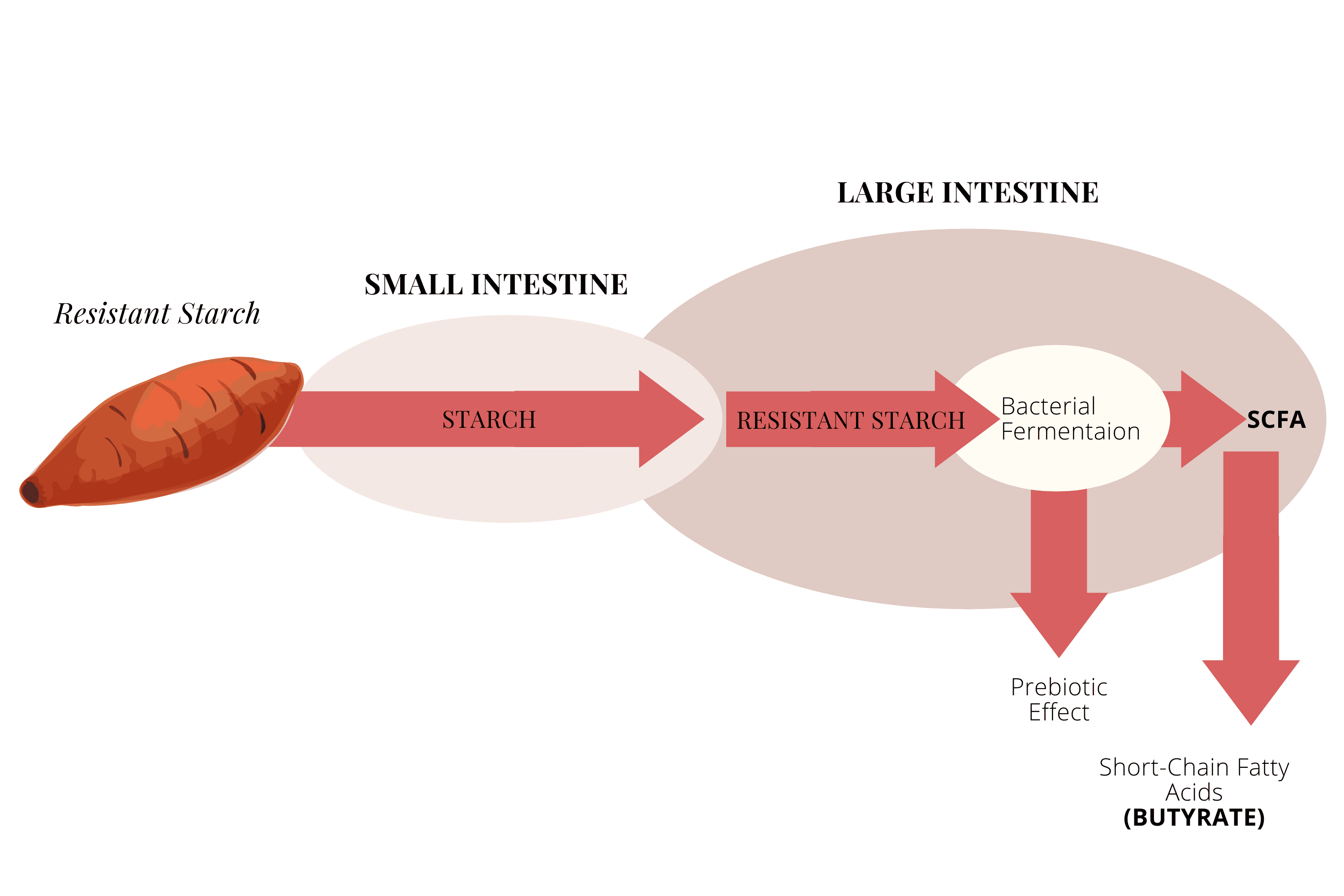
Resistant starch (RS) is a type of starch that resists digestion in the stomach and small intestine, reaching the large intestine intact where it serves as food for beneficial gut bacteria. When these bacteria ferment resistant starch, they produce short-chain fatty acids (SCFAs)—particularly butyrate—which fuel the cells lining your colon, regulate metabolism, support immune function, and reduce inflammation.
The best food sources include cooked and cooled potatoes, green bananas, legumes, and cassava. While increasing resistant starch benefits most people, those with SIBO, severe dysbiosis, or FODMAP sensitivity may need a more targeted approach based on their individual microbiome profile.
What Is Resistant Starch?
When you think of starch, you might picture potatoes, bread, rice, grains, or pasta—foods that are typically gloopy, sticky, and serve as fuel for gut bacteria (though not always the beneficial ones).
Not all starches are the same. Due to variations in molecular structure, starch can be quickly digested, slowly digested, or not digested at all. Those that aren’t digested in our stomachs or small intestines (by digestive enzymes) reach the large intestine intact.
These starches that “resist” digestion are called resistant starches (RS).
How Resistant Starch Is Fermented in Your Gut
Resistant starch is a complex carbohydrate—a polysaccharide made up of many repeating sugar units.

Starches are made up of two types of polysaccharides:
Amylopectin: A highly branched molecule with substantial surface area. The branching chains are easily accessible to digestive enzymes, so digestion happens quickly and raises blood sugar (glucose).
Amylose: A straight-chain polysaccharide molecule. This linear formation hinders enzyme access, so these foods digest far slower. They resist the release of their sugars and produce a slower blood sugar rise. Amylose structures predominate in resistant starch.
It’s this molecular makeup that allows RS to resist digestion and travel further into the gut—becoming fermentable food for bacteria.
Different bacteria have the genetic capacity to produce the amylase enzymes needed to break down these complex amylose structures.
Terminology note: Words ending in -ose are sugars (e.g., amylose), while words ending in -ase are enzymes that degrade that sugar (e.g., amylase digests amylose).
Because of this, amylase-producing bacteria like Ruminococcus bromii are keystone gut microbiome species. R. bromii initiates the breakdown of RS molecules, allowing other bacteria to use the fragments to produce beneficial short-chain fatty acids (SCFAs) like butyrate.
The Benefits of Short-Chain Fatty Acids (SCFAs)
SCFAs are synonymous with gut health. It’s difficult to discuss gut health without mentioning these crucial beneficial gut bacteria breakdown products—butyrate, propionate, and acetate.
SCFAs are end-products of bacterial fermentation. These important metabolites are natural chemical compounds formed from microbial digestion in the gut. They play pivotal roles in gut lining health, brain function, metabolism regulation, and immune function.
In scientific terms, SCFAs are fatty acid molecules with fewer than six carbon atoms. The common SCFAs are:
SCFA Name | Salt Name | Formula |
Acetic acid | Acetate | C₂H₄O₂ |
Propionic acid | Propionate | C₃H₆O₂ |
Butyric acid | Butyrate | C₄H₈O₂ |
Your gut microbes and your body manage the biochemistry—understanding the basics helps us recognise how we can better influence our gut health through providing ample RS.
SCFAs are the main energy source for colonocytes (the cells lining your large intestine) and regulate metabolism, appetite, body composition, and immune function. Each SCFA type has different abundance and roles:
The ratio of different SCFAs matters:
Acetate & Propionate: The ratio regulates liver fat metabolism
Acetate & Butyrate: The ratio controls the gut IgA immune response to the gut microbiome itself
The Three Primary SCFAs
Acetate: The most abundant SCFA because many bacteria can produce it. It acts as an essential energy source for many other bacteria—many of which use acetate to produce butyrate.
Propionate: Involved in the release of glucose from the liver, which is important for maintaining blood glucose levels. It also triggers the release of anti-inflammatory molecules and those that control appetite.
Butyrate: One of the most important SCFAs for gut health. It provides fuel for intestinal cells and assists in maintaining gut lining integrity. Like propionate, it can trigger the release of anti-inflammatory molecules and help control appetite.
It’s through these beneficial actions of SCFAs that resistant starch gains its impressive reputation—largely due to the microbes that ferment it.
🔬 VICTORIA’S EXPERT INSIGHT
“When I analyse microbiome test results, I specifically look at the abundance of SCFA-producing bacteria—species like Faecalibacterium prausnitzii, Roseburia, and Ruminococcus bromii. These are the bacteria that convert resistant starch into butyrate and other beneficial compounds. If these populations are low, simply adding more resistant starch to the diet may not produce the expected benefits because the bacteria needed to ferment it aren’t present in sufficient numbers. This is why we test first—it tells us whether you need to increase RS intake, rebuild your SCFA-producing bacteria, or both.”
— Victoria, Microbiologist
Book Your Free Evaluation Call

Are You Getting Enough Resistant Starch?

One reliable way to determine if you’re consuming adequate RS is to test for the bacteria in your gut that produce SCFAs.
The amount of SCFAs in your colon depends on:
The amount (and type) of carbohydrates you eat
The abundance (or lack) of SCFA-producing gut bacteria you have and feed
If you eat adequate RS, you feed the beneficial bacteria (and probiotic bacteria) that produce SCFAs.
Key SCFA-producing bacteria include:
Bacteroides thetaiotaomicron
Eubacterium rectale
Faecalibacterium prausnitzii
Ruminococcus bromii
Roseburia
Each of these species is reported in the advanced gut microbiome testing we use. To accurately determine the state of your gut health, testing is an integral part of our programs.
Ultimately, RS functions like soluble fermentable fibre, nourishing the SCFA-producing gut bacteria that reside in your large intestine.
The Difference Between Resistant Starch and Fibre
If resistant starch acts like fibre, what is the difference?
This is a common point of confusion. One source of this confusion is that in nature, nothing occurs in isolation—many parts make up the whole. Resistant starch and various types of fibre co-exist in most fruits and vegetables.
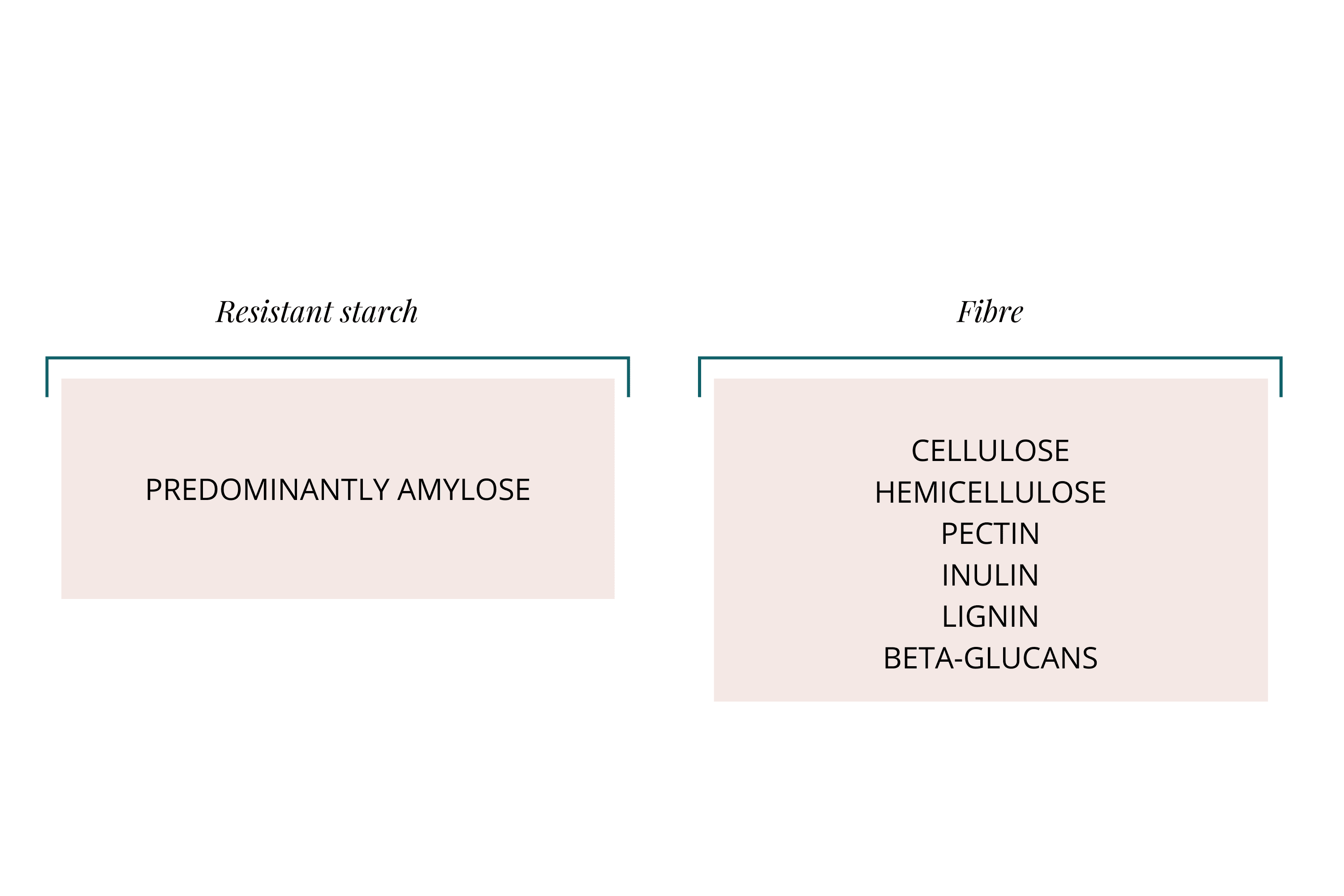
Fibre is another type of polysaccharide, just made up of different molecules:
Resistant starch: Predominantly amylose
Fibre: Cellulose, hemicellulose, pectin, inulin, lignin, beta-glucans
Fibre is categorised by its ability to dissolve in water (solubility). RS acts like a soluble fibre—similar to inulin, pectin, and vegetable gums. These are also excellent examples of prebiotic fibres.
Prebiotics are crucial for well-balanced gut health as, similar to RS, they promote SCFA production. For a comprehensive understanding of prebiotics, read The Ultimate Prebiotics A-Z Guide (plus 31 of the most common prebiotics).
The goal is to expand gut microbiome diversity and enhance production of beneficial metabolites like SCFAs. The best approach is eating a wide variety of different types of RS and fibres/prebiotics. This encourages bacterial abundance, cross-feeding between different species from each other’s metabolites, and evenness in your gut population (no single species dominates—well-balanced).
These are all positive traits of a healthy gut microbiome.
What Science Says About Resistant Starch Benefits
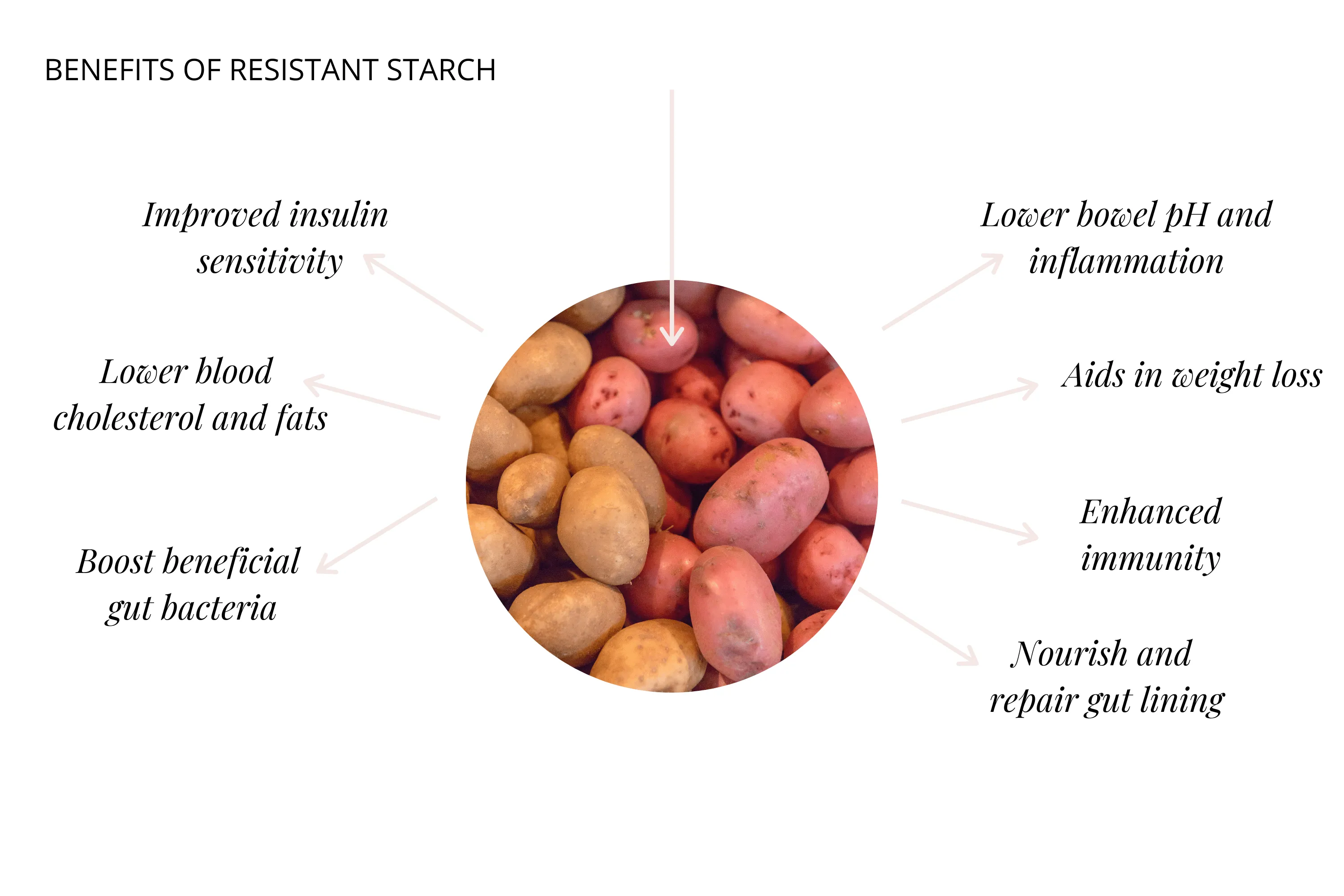
Now that we understand what resistant starch is, how it’s fermented, and by which bacteria—here are some of the documented benefits of consuming resistant starch:
1. Improved Insulin Sensitivity
RS digests slowly and doesn’t spike blood sugar—meaning the body doesn’t need to release insulin in response.
2. Lower Blood Cholesterol and Fats
Early studies suggest RS improves blood fat profiles and has the potential to reduce risk factors involved with atherosclerosis and type 2 diabetes development in overweight individuals.
3. Nourish and Repair Gut Lining
One of the cornerstones of gut health is nurturing a healthy gut lining. Long-term RS intake has been shown to improve the integrity of the mucus lining the gut, reduce gut cell death, and decrease inflammation.
4. Boost Beneficial Gut Bacteria
Increases in the abundance and diversity of beneficial gut microbes have been recorded with RS supplementation. This not only boosts SCFA production but also strengthens the immune system and resistance against non-beneficial microbes.
5. Lower Bowel pH and Inflammation
Studies have identified RS as a promising dietary addition for the prevention and/or treatment of inflammatory bowel conditions. It has been shown to reduce bowel pH and increase lactobacilli and bifidobacteria levels.
6. Aids in Weight Loss
Reduction in food consumption is associated with RS intake, as is the ability of RS to increase fat oxidation and reduce fat storage cells.
7. Enhanced Immunity
Due to the supportive benefits of SCFAs, RS has been associated with supporting important immune regulation roles. Through this microbe-mediated pathway, a number of harmful metabolites are also reduced, including ammonia and phenol.
The Top 10 Resistant Starch Foods
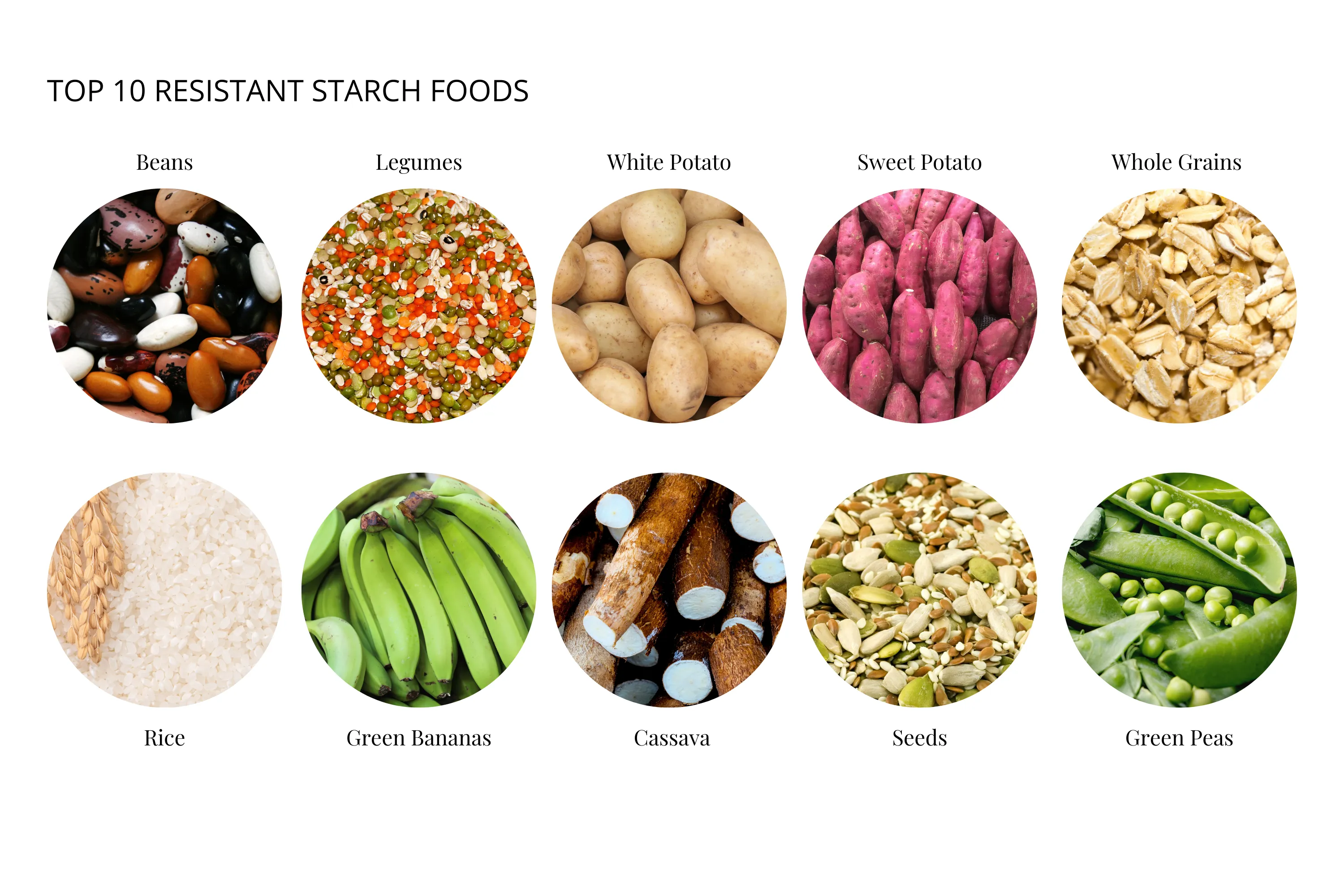
Similar to increasing prebiotic fibre intake, resistant starch is found most abundantly in plants. Here are the most plentiful sources:
1. Beans
Navy, white, kidney, and black-eyed beans are excellent sources of RS. Soak them overnight (6 to 12 hours) before cooking and enjoy in salads, as homemade baked beans, and more.
2. Legumes
Chickpeas and lentils are another excellent choice for increasing RS intake. Similar to beans, soak legumes overnight before cooking and cooling. Hummus is a delicious and easy way to include more chickpeas in your diet.
3. White Potato
Both types of potato (white and sweet) contain RS. The highest levels from white potatoes are available once they are cooled and then reheated. Potato starch is another way to use white potato in cooking—use it in place of cornstarch or arrowroot.
4. Sweet Potato or Yams
The versatile sweet potato—whether purple, white, or orange—is another excellent source of RS. Cooked and cooled preparation yields the highest levels.
5. Whole Grains
Oats, buckwheat, quinoa, millet, amaranth, barley, brown rice, and wheat all contain RS. To increase levels, cook in advance and cool before eating. Uncooked oats (as in overnight oats for bircher muesli) have the highest content. Grain-based products like bread and pasta also contain some RS.
6. Rice
White rice that has been cooked and then cooled (similar to traditional fried rice preparation) yields higher resistant starch levels than freshly cooked rice.
7. Green Bananas or Plantains
Green bananas (unripe regular bananas) are one of the richest RS sources. Substituting a portion of green banana flour in baking is an easy way to increase RS intake. Plantains (different from green bananas, though they can look similar) are also high in RS—both yellow and green varieties. Try our Cassava and Green Banana Pancakes for an RS-boosting breakfast.
8. Cassava (Tapioca)
A tuberous vegetable prevalent in tropical climates and cuisine, cassava is an RS powerhouse. It can be added as a flour or, if available, as a fresh tuber.
Cassava recipes to try:
9. Seeds
Pumpkin, flax, sunflower, pistachio, and sesame seeds also contain some RS. Including these alongside other sources adds variety and offers their many other health benefits.
10. Green Peas
Peas, cooked or raw, are a very good source of RS. However, if you’re sensitive to FODMAPs and the prebiotic GOS, another source may be less problematic as GOS is often not tolerated in IBS and severe leaky gut.
What This Means for Your Gut Health
Increasing or introducing resistant starch into your diet can be a powerful tool on your gut health journey. Anything that balances your microbiome, helps heal your gut, and comes from wholefood sources is generally beneficial.
However, in some cases, increasing these foods can lead to further discomfort and increased symptoms. They can make you feel worse before you feel better.
If you struggle with FODMAP foods or have severe leaky gut or gut dysbiosis, working with a qualified health professional is essential.
In addition to a personalised food plan and individual gut microbiome testing, knowing exactly which SCFA-producing bacteria you have in abundance (and which you lack) allows you to correct imbalances and actually reap the benefits of RS-rich foods.
Ready for a Targeted Approach?
Resistant starch is a valuable tool for supporting gut health, feeding beneficial bacteria, and increasing SCFA production. However, the benefits depend on having adequate populations of the bacteria that ferment RS—without them, you may not see the expected improvements, or you may experience uncomfortable symptoms.
At Prana Thrive, we use comprehensive metagenomic testing to identify exactly which SCFA-producing bacteria are present in your gut. Every test is reviewed by Amanda (who has personally analysed over 2,000 individual microbiome tests) with scientific oversight from Victoria, our in-house microbiologist.
Our AIM Method™ (Analyse → Integrate → Monitor) ensures:
Analyse: Comprehensive testing reveals your baseline bacterial populations, including key RS-fermenting species like Ruminococcus bromii, Faecalibacterium prausnitzii, and Roseburia
Integrate: A personalised protocol incorporating the right RS sources at the right time—alongside targeted interventions if your SCFA-producing bacteria need rebuilding first
Monitor: Follow-up testing and consultations to track changes in your bacterial populations and SCFA production as your microbiome improves
Book a free 15-minute evaluation call to discuss your symptoms and find out if our testing-guided approach is right for you.
We work with a limited number of clients each month to ensure everyone receives the attention they deserve. If you’re ready to understand your unique microbiome signature and optimise your RS intake accordingly—book your call now.
Book Your Free Evaluation Call
Related Articles:
Service Pages:
How much resistant starch should I eat daily?
Research suggests 15–30 grams of resistant starch daily provides meaningful benefits, though most Australians consume far less—typically 3–9 grams. The goal isn't to hit a specific number but to consistently include RS-rich foods as part of a diverse, fibre-rich diet. Start gradually to allow your microbiome to adapt, as sudden large increases can cause temporary bloating and gas.
Does cooking destroy resistant starch?
Cooking actually affects RS content in different ways depending on the food and method. For potatoes and rice, cooking followed by cooling increases RS content through a process called retrogradation—the starch molecules reorganise into more resistant structures as they cool. Reheating doesn't significantly reduce this benefit. For green bananas, RS content decreases as they ripen and when heated, so green banana flour is best used in recipes that don't require high temperatures.
Can resistant starch help with weight loss?
RS may support weight management through several mechanisms: it increases satiety (feeling full), promotes fat oxidation over fat storage, and feeds bacteria that produce appetite-regulating SCFAs. However, RS alone isn't a weight-loss solution—it works best as part of a balanced diet that supports a healthy, diverse microbiome.
Why does resistant starch make some people bloated?
Bloating typically occurs when RS is introduced too quickly or when the bacteria needed to ferment it efficiently aren’t present in adequate numbers. If you have SIBO or significant dysbiosis, RS can feed bacteria in the wrong location (small intestine instead of large intestine) or feed problematic bacteria. This is why testing before significantly increasing RS intake is valuable—it reveals whether your microbiome is ready to benefit from increased RS or whether underlying issues need addressing first.
Is resistant starch the same as prebiotic fibre?
They're related but not identical. Both RS and prebiotic fibres resist digestion and reach the large intestine where they're fermented by bacteria to produce SCFAs. The difference is molecular structure: RS is predominantly amylose (a glucose polymer), while prebiotic fibres include various compounds like inulin (fructose-based), pectin, and beta-glucans. For optimal gut health, consuming a variety of both RS and prebiotic fibres provides diverse fuel for different beneficial bacterial populations.
Which resistant starch foods are best for beginners?
Cooked and cooled potatoes or rice are often well-tolerated starting points because they're familiar foods with moderate RS content. Legumes and beans, while excellent RS sources, contain GOS (galacto-oligosaccharides) which can cause digestive discomfort in sensitive individuals. Green banana flour can be gradually incorporated into smoothies or baking. The key is starting slowly and observing how your body responds before increasing amounts.