The Vital Role Lactobacillus Reuteri Plays in Your (and Your Baby's) Health

Author:
Amanda Ledwith, BHSc Naturopathy
Last Updated:
Reading Time:
27 mins
Categories:
Probiotics & Bacteria
lactobacillus-reuteri
What You'll Learn
Lactobacillus reuteri is one of the most extensively studied probiotic strains, offering numerous health benefits from improving gut health and fighting infections to supporting infant health. This beneficial bacteria naturally colonises the intestines, stomach, and even breast milk—but only 10–20% of people still have it naturally occurring in their gut microbiome (down from 30–40% in the 1960s).
Key benefits of L. reuteri:
Gut health — Helps heal leaky gut, increases bowel movement frequency, reduces constipation and diarrhoea
Antimicrobial properties — Produces reuterin (inhibits harmful bacteria), fights Candida, H. pylori, E. coli, and Salmonella
Anti-inflammatory effects — Reduces pro-inflammatory cytokines, increases regulatory T cells (Tregs)
Infant health — Reduces colic in breastfed babies, prevents infant allergies and eczema, naturally found in breast milk
Vitamin production — Produces vitamin B12, B9 (folate), and increases vitamin D levels by up to 25.5%
Immune support — Helps prevent viral and bacterial infections, supports vaginal microbiota health
But here's what most people don't realise: Taking L. reuteri supplements without knowing your bacterial balance means you're guessing. Some people are severely depleted in Lactobacillus species and benefit dramatically from L. reuteri supplementation. Others have adequate Lactobacillus levels but are missing different bacterial species—like Faecalibacterium prausnitzii or Bifidobacterium—that require different interventions. Testing reveals whether YOU need L. reuteri or other bacterial species.
Lactobacillus reuteri is a strain of probiotic bacteria known for providing several benefits—from improving gut health and fighting infection to supporting infant development. In this article, we’ll take you through exactly what Lactobacillus reuteri is and how it can help you.

What Is Lactobacillus Reuteri?
Lactobacillus reuteri, or L. reuteri for short, is one of the most extensively studied probiotic bacteria strains and offers numerous health benefits. L. reuteri is a lactic acid bacteria strain that lives in the intestines—sometimes the stomach—in humans as well as other mammals and birds. It’s also found in the urinary tract, skin, and breast milk.
The name originates from the German microbiologist Gerhard Reuter, who made the discovery in the 1960s.
L. reuteri itself is categorised into sub-strains. Different strains of L. reuteri are associated with different effects and benefits. For example, the L. reuteri strain Primadophilus reuteri is known to support a strong immune system and healthy digestion.
Although L. reuteri mainly lives in the intestines and is found in other sites around the body, not everyone has it. Back in the 1960s, 30–40% of the population had L. reuteri naturally occurring in their gut microbiome. Today, only around 10–20% of people have the bacteria strain in their gut.

Gut Colonisation of L. Reuteri
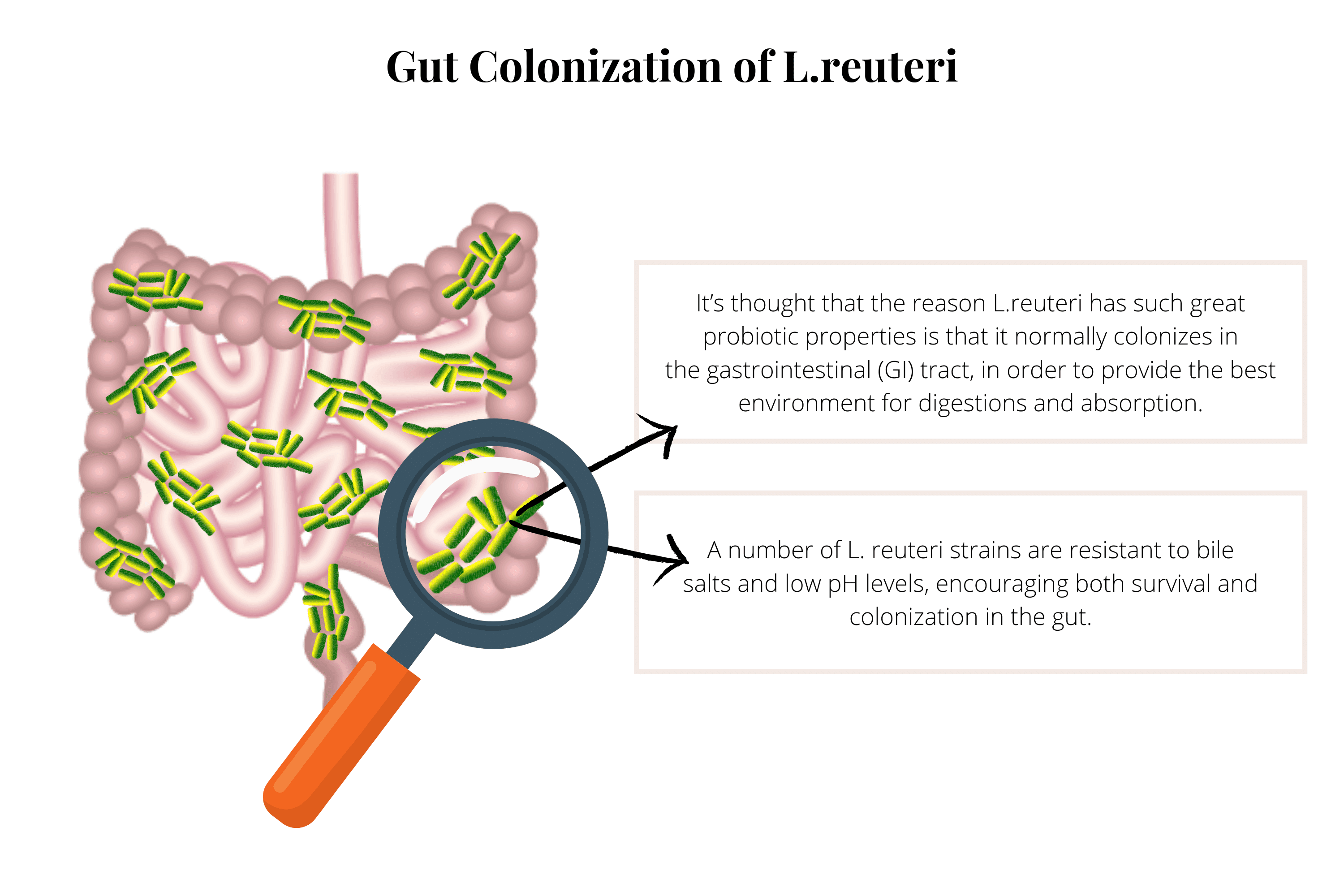
L. reuteri colonises in the gut of humans and animals. It’s thought that the reason it has such great probiotic properties is that it normally colonises in the gastrointestinal (GI) tract. In order to provide the best environment for digestion and absorption, some sites of the GI system have developed harsh conditions for microorganisms to colonise and thrive.
In order to colonise in the gut in the first place, a microorganism has to survive in these sometimes tough conditions. A number of L. reuteri strains are resistant to bile salts and low pH levels, encouraging both survival and colonisation in the gut.
The Metabolite Production Profile of L. Reuteri
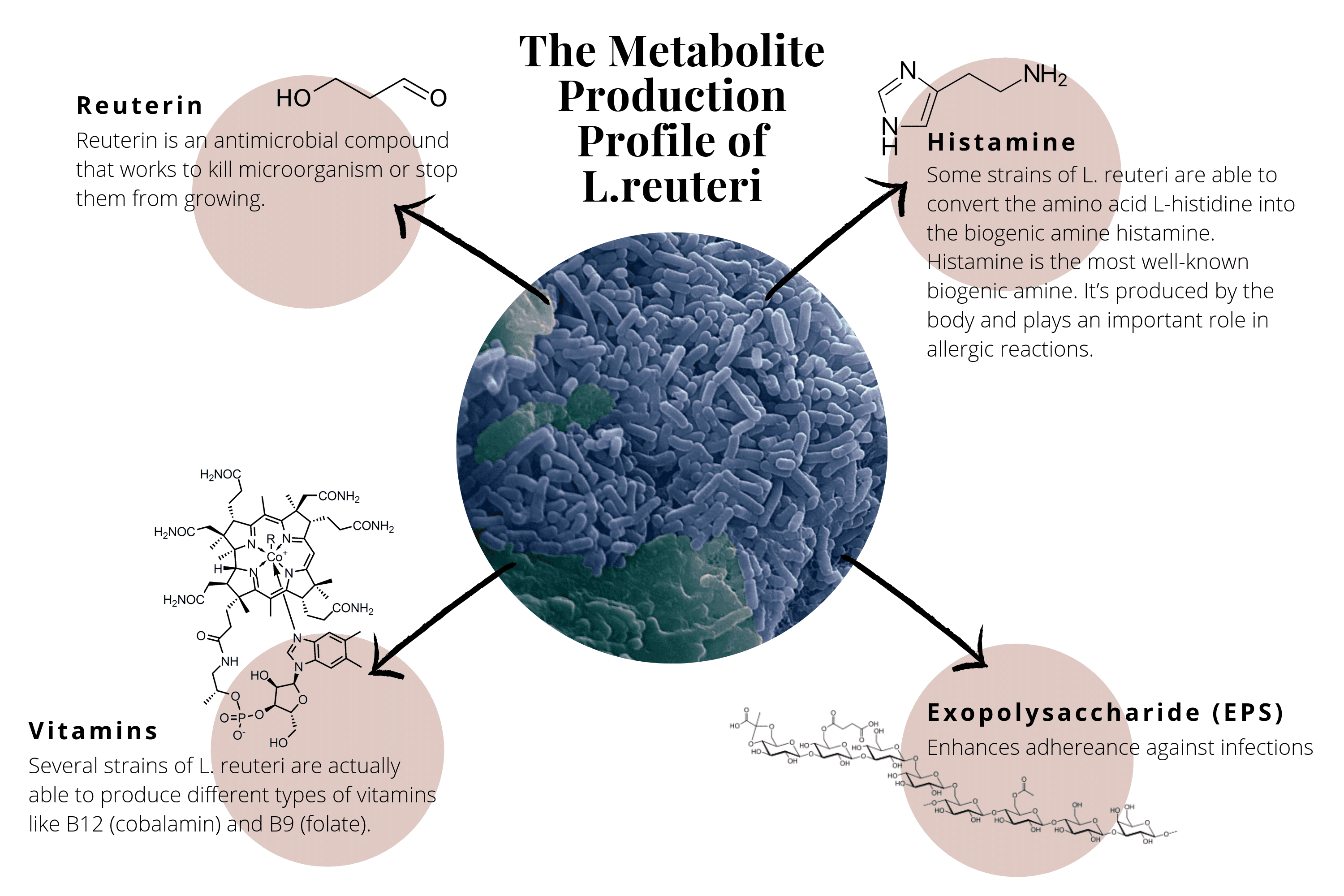
L. reuteri’s antimicrobial and immune-boosting effects are linked to its metabolite production profile. A metabolite is a substance produced or used when the body breaks down food, chemicals, or drugs. This process is called metabolism and makes energy needed for the body to grow, reproduce, and maintain health. Here are four metabolites in L. reuteri that promote overall wellbeing.
Reuterin
The majority of L. reuteri strains from humans and poultry are able to produce reuterin. Reuterin is an antimicrobial compound that works to kill microorganisms or stop them from growing. The metabolite can inhibit a range of microorganisms, mainly Gram-negative bacteria.
The term Gram-negative bacteria is used to classify bacteria that turn a certain colour after a chemical process known as Gram staining. Gram-negative infections include cholera, typhoid fever, plague, and salmonella.
Histamine
Some strains of L. reuteri are able to convert the amino acid L-histidine into the biogenic amine histamine. Biogenic amines are a group of compounds derived from amino acids, the building blocks for protein. Histamine is the most well-known biogenic amine and plays an important role in allergic reactions.
One study found that histamine derived from the L. reuteri strain 6475 suppressed tumour necrosis factor (TNF). TNF refers to a protein in the body that causes inflammation. This suggests that certain strains of the bacteria could be very useful in treating or preventing inflammation in autoimmune diseases.
Vitamins
There are 13 essential vitamins that you need as the human body isn’t able to synthesise them. Several strains of L. reuteri are actually able to produce different types of vitamins like B12 (cobalamin) and B9 (folate). B12 plays a vital role in the production of red blood cells and DNA, as well as keeping your nervous system in good working order. The vitamin is also essential in reuterin production.
Exopolysaccharide (EPS)
Exopolysaccharides (EPS) are long-chain polymers that have been created and produced mainly by bacteria and microalgae. The EPS produced by L. reuteri is particularly important for biofilm formation and attachment of L. reuteri to surfaces within the body.
A biofilm is a collection of one or more types of microorganisms that can grow on lots of different surfaces. Microorganisms that can form biofilms include fungi and bacteria. As well as this, the EPS created by L. reuteri is able to stop the adhesion of E. coli to epithelial cells.
Role of L. Reuteri in Healing Leaky Gut
If you’ve ever experienced digestive problems like stomach cramps or bloating, you know how uncomfortable it can feel. If you have a combination of digestive problems and acne or migraines, then you may be suffering from leaky gut.
Leaky gut, also known as increased intestinal permeability, is a digestive condition where bacteria and toxins are able to “leak” through the intestinal wall and into the body. Physical, biochemical, and immunological barriers can all affect gut barrier function. If there are abnormalities in the intestinal barrier, the permeability may increase, resulting in leaky gut.
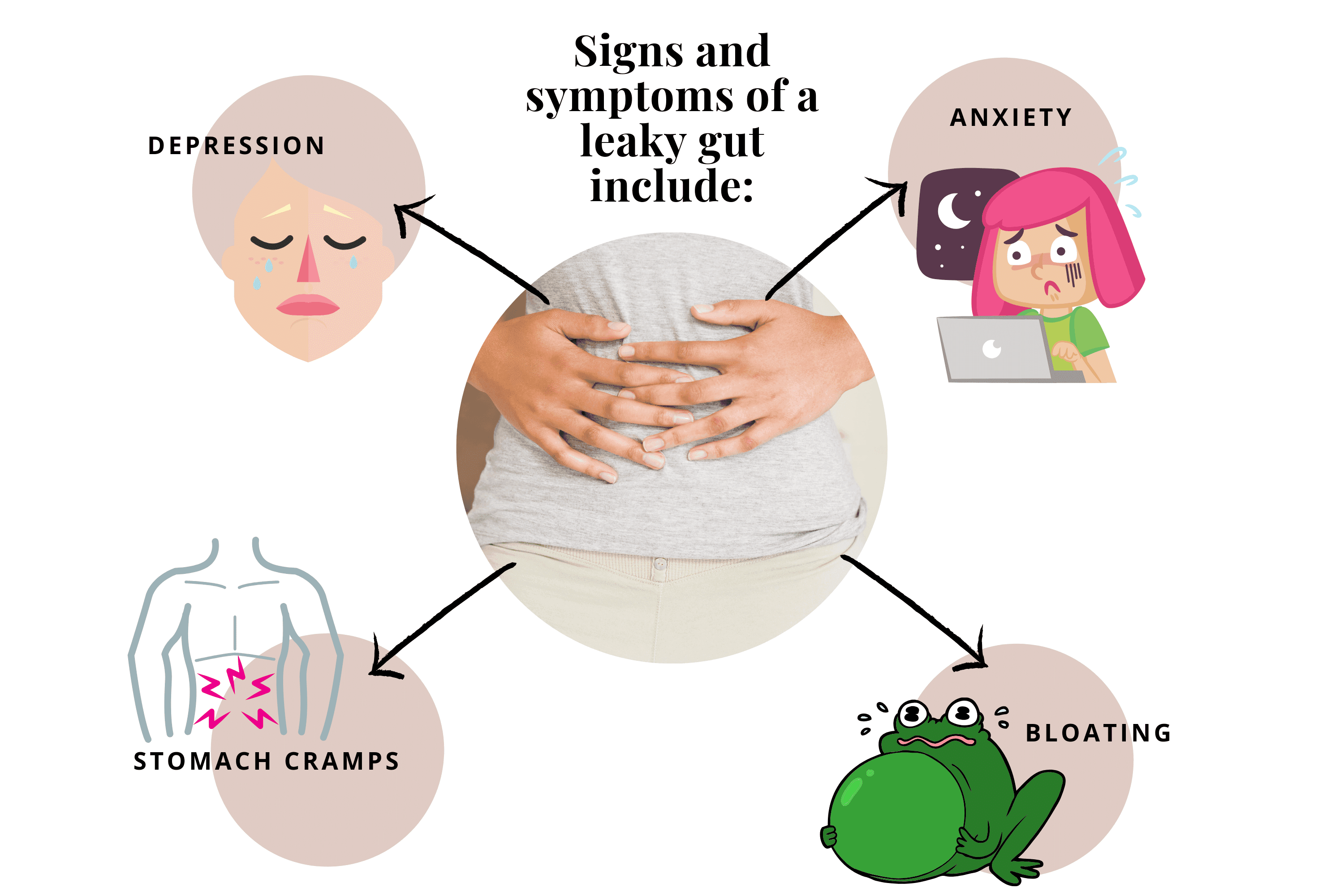
Signs and symptoms of leaky gut include depression, anxiety, stomach cramps, and bloating.
Read more: Do You Have Leaky Gut? (Plus Warning Signs to Look For)
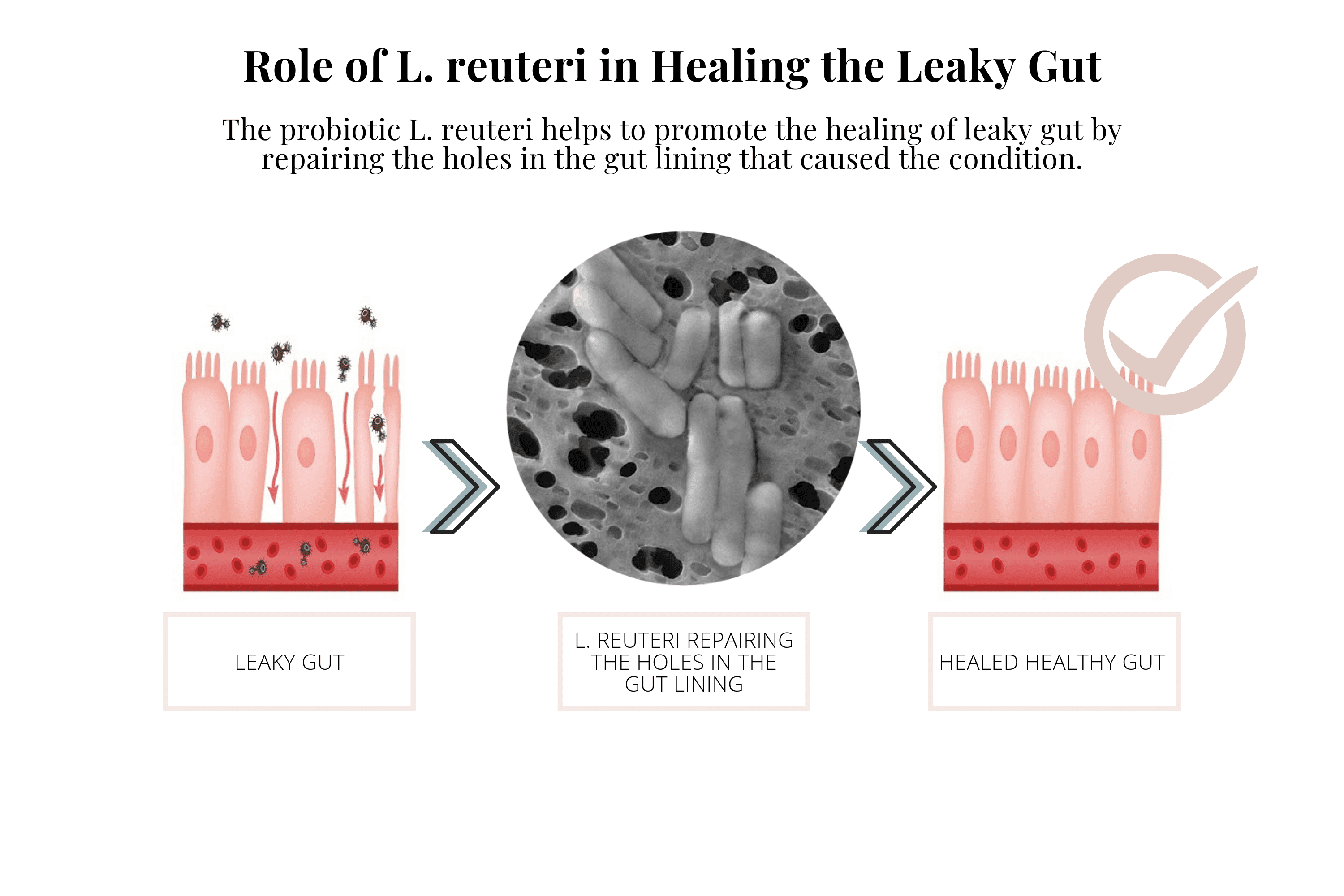
Various probiotics are known for their abilities to improve mucosal barrier function, in turn strengthening the intestinal wall. One of the most well-studied examples of this is the probiotic L. reuteri. This beneficial bacteria helps promote the healing of leaky gut by repairing the holes in the gut lining that caused the condition.
Role of L. Reuteri on Candida
Candida is a type of yeast that is usually found in small amounts in the body—like in the mouth and intestines and on the skin. At normal levels, it doesn’t cause a problem. However, when Candida begins to get out of control, it can cause an infection known as candidiasis. Candida is the most common cause of fungal infections in humans.
Research suggests that L. reuteri may have antifungal properties, suggesting it could stop the growth and eventually kill off various species of Candida.
In a study investigating the antifungal potential of the bacteria, two L. reuteri strains, DSM 17938 and ATCC PTA 5289, completely inhibited the growth of some Candida species including Candida albicans. Candida albicans is one of the most common types of Candida that live in the gut flora. Types of Candida albicans infections include urinary yeast infection, oral thrush, and genital yeast infection.

Role of L. Reuteri in Babies with Colic (L. Reuteri Found in Breastmilk)
Have you got a colicky baby? When distressed parents find their breastfed infant won’t stop crying, there might be a surprising remedy: probiotics.
The probiotic L. reuteri is naturally contained in human breast milk. Research suggests that the presence of lactobacilli may be a good marker for healthy milk microbiota that hasn’t been altered by antibiotics. Breast milk contains several components and harbours a unique set of bacteria that may serve as a source of colonising bacteria for a newborn.
Colic is classed as inconsolable crying in an infant that usually starts around the second week of life and can last until about three months old. Colic affects up to 28% of infants, understandably causing considerable stress for both parents and healthcare providers. In the first three months of a baby’s life, crying is the number one reason for paediatric visits.
Over the years, there have been similar recommendations for breastfeeding mothers. However, studies suggest that low numbers of intestinal Lactobacillus may play a role in colic, and studies have documented improved symptoms after treatment with Lactobacillus compared with a treatment of simethicone. Simethicone is an anti-gas medication used to help with bloating and allows gas to pass more easily.
In a randomised study, 50 breastfed colicky babies aged between 2 to 16 weeks received either L. reuteri DSM 17938 or placebo daily for 21 days. At all stages in the study, crying time for the treatment group was significantly less than the placebo group. By day 21, the number of infants who cried for more than three hours a day was noticeably lower in the treatment group.

Role of L. Reuteri in Preventing Infant Allergies
Over the last several decades, the prevalence of allergic diseases has risen and is now recognised as a burden to public health. Almost 20% of the Australian population has an allergic disease, and that percentage is increasing.
Different strains of probiotics have been used in allergy prevention trials. But why use probiotics to help prevent childhood allergies?
Well, the increasing prevalence of allergies in affluent countries may actually be caused by reduced microbial stimulation. Probiotics may be used to increase microbial stimulation, enrich the gut, and promote a balanced immune system. L. reuteri has demonstrated potential in preventing allergies early on in life.
One study using L. reuteri supplementation showed promise in preventing allergy-induced eczema. The supplement was given to pregnant women daily from 36 weeks of pregnancy; the infants then continued with the same supplement until 12 months of age.
The study found that there was less IgE-associated eczema at two years of age when both the infant and mother took the supplement. IgE is a type of antibody that plays a major role in response to allergens such as anaphylactic drugs and bee stings.
Read more: The Gut-Skin Connection: The Real Science Behind Clear Skin from Within

Role of L. Reuteri in Fighting Viral Infections
There has been a considerable amount of research into the effects of L. reuteri on viral infections. There is evidence showing that the bacteria may help fight against rotavirus, papillomaviruses, and circoviruses.
Experts believe that L. reuteri works to fight infection and improve outcomes by regulating the microbiota and secreting metabolites that contain antiviral properties. The gut microbiota refers to the microbe population that lives in your intestine.
The Benefits of Lactobacillus Reuteri
Lactobacillus reuteri has several benefits—from helping fight infection to boosting vitamin D levels. Here are seven benefits that the bacteria brings.
1. Anti-Inflammatory Effects
Low levels of L. reuteri have been linked to an increase in the number of cases of inflammatory diseases. Some strains of the bacteria can also reduce the production of pro-inflammatory cytokines. Cytokines are regulators in the body’s response to certain things like infection or immune reactions. Whereas some cytokines reduce inflammation and promote healing, pro-inflammatory cytokines can make disease worse.
One study found that L. reuteri stopped NF-κB, which is important in reducing whole-body inflammation. Another study showed that L. reuteri increased levels of oxytocin, the feel-good hormone, which is known to have anti-inflammatory effects. L. reuteri has also been shown to increase Treg cells in the body. Regulatory T cells, or Tregs, control the immune response and help prevent autoimmune disease.
2. Aids Gut Health
The gut is incredibly complex and important to our overall health. L. reuteri has been shown to switch the body’s primary food source from sugar to tryptophan. This is important as gut bacteria need to consume tryptophan in order to produce serotonin and keep the gut in proper working order.
By encouraging gut bacteria to consume tryptophan, it helps protect the gut from infection and lessen your susceptibility to problems such as IBS. L. reuteri has also been found to help constipation and increase the frequency of bowel movements, all of which contribute towards a healthy gut.
One study found that L. reuteri increased the number of bowel movements, going from 3.89 to 5.28 bowel movements per week. The bacteria has been shown to stop diarrhoea in children as well as reduce gut lining inflammation in children with active ulcerative colitis.
3. Boosts Vitamin D
Vitamin D, also known as the sunshine vitamin, is produced by the body in response to sun exposure. It can also be taken as a supplement. It’s essential for a healthy immune system, nervous system, brain, teeth, and bones. Evidence suggests that a large portion of the population is vitamin D deficient.
In one study, taking L. reuteri has been shown to increase levels of vitamin D by 25.5%. This study was the first to show that oral probiotic supplements may increase levels of the sunshine vitamin. As more human studies are carried out in this field, more detail on the precise mechanism of how the bacteria affects vitamin D levels will come to light.
4. Increases Vitamin B12 and B9 (Folate)
Several strains of L. reuteri are able to produce vitamins such as vitamin B12 and B9. B vitamins support many vital functions throughout the body and are essential for maintaining good health. There are at least four strains of L. reuteri that can produce vitamin B12. Some specific strains of L. reuteri have also been found to produce folate, including L. reuteri JCM1112.
5. Helps Prevent Infections
L. reuteri can help prevent and fight infection mainly due to its antimicrobial properties. It has the ability to produce antimicrobial molecules like lactic acid, acetic acid, and reuterin. It’s this antimicrobial activity that allows L. reuteri to stop the colonisation of harmful microbes. The bacteria may help prevent a number of infections, mainly from Gram-negative bacteria.
Some strains can stop the growth of Candida in the vagina. Research shows that L. reuteri has the power to completely eradicate H. pylori from the intestine. H. pylori, or Helicobacter pylori, is a type of bacteria that can infect your stomach and is a common cause of peptic ulcers. Lactobacillus reuteri may also help prevent Salmonella and E. coli.
6. Autism
Evidence suggests that exposure to maternal obesity during pregnancy increases the chance of the child developing neurodevelopmental disorders such as autism. In an animal study, maternal high-fat diets (MHFD) were shown to induce social deficits in their offspring. The levels of L. reuteri were reduced nine-fold in the gut microbiome of the offspring on a high-fat diet compared to those on a regular diet. What’s more, supplementing L. reuteri led to significant improvements in sociability.
7. Fertility
Probiotics may help improve fertility by encouraging a healthy vaginal microbiota. Research suggests that an abnormal vaginal microbiota may negatively affect pregnancy rate in both IVF and natural parents. One study of 130 women undergoing IVF found that those with an abnormal vaginal microbiota had a tougher time getting pregnant.
Further animal research shows that eating probiotic yoghurt can cause more acidic conditions in the mouth, skin, and vagina. Evidence suggests that an acidic pH in the vagina is linked to peak fertility, which is estimated to be around age 25.
Book Your Free Evaluation Call

Your Gut Needs the Right Lactobacillus Strains - But Which Ones?
Lactobacillus reuteri offers powerful benefits for gut health, immunity, and infant development. But taking L. reuteri supplements without knowing your bacterial balance is guesswork.
Our AIM Method uses comprehensive metagenomic testing to identify whether you’re depleted in Lactobacillus species (including L. reuteri), which other bacterial species are missing, and which interventions will restore YOUR bacterial balance.
We don’t recommend generic probiotic supplements. We identify which bacterial species YOU’re depleted in and create targeted protocols.
Book Your Free Evaluation Call
When L. Reuteri Supplementation Isn’t Enough:
Why Testing Matters
You’ve been taking L. reuteri supplements hoping they’ll help with your digestive issues, recurrent infections, or infant colic. Maybe you’ve seen some improvement—or maybe you haven’t seen any change at all despite consistent supplementation.
Here’s what you need to understand: L. reuteri supplementation can be powerful—but only if you’re actually depleted in Lactobacillus species and only if Lactobacillus depletion is the primary driver of your symptoms.
Why L. Reuteri Supplementation Alone Isn’t Always Enough:
1. You Don’t Know If You’re Actually Depleted in Lactobacillus
Taking L. reuteri supplements provides this specific strain—but only if your gut is depleted in Lactobacillus species will supplementation make a significant difference.
If your Lactobacillus levels are adequate but you’re severely depleted in Faecalibacterium prausnitzii (butyrate producer) or Bifidobacterium (GABA producer), taking L. reuteri won’t address the root bacterial imbalances driving your symptoms. You need targeted interventions for the species you’re actually missing.
Without testing, you’re guessing whether Lactobacillus depletion is the problem.
2. Opportunistic Pathogens May Be Elevated
L. reuteri produces reuterin, which inhibits pathogenic bacteria like E. coli, Salmonella, and Candida. But if you have established bacterial or fungal overgrowths, simply taking L. reuteri supplements may not eliminate these pathogens—you might need targeted antimicrobials first, then rebuild Lactobacillus populations.
If Candida, H. pylori, or opportunistic bacteria are elevated, supplementing L. reuteri without addressing overgrowths means you’re fighting an uphill battle.
3. Other Lactobacillus Species May Be More Important
L. reuteri is one of many Lactobacillus species. Your gut might need L. rhamnosus (GABA production), L. plantarum (acetylcholine production), or L. acidophilus (vaginal health) more urgently than L. reuteri.
Taking a single-strain L. reuteri supplement when you’re depleted in multiple Lactobacillus species means you’re only partially addressing the problem.
4. Gut Barrier May Be Severely Compromised
L. reuteri helps heal leaky gut by strengthening tight junctions—but if your intestinal permeability is severe, you might need additional interventions like L-glutamine, zinc carnosine, butyrate, and other barrier-supporting nutrients alongside L. reuteri supplementation.
Without testing, you don’t know if gut barrier dysfunction is present or which interventions will repair it most effectively.
What Testing Reveals
When Victoria reviews comprehensive metagenomic test results for clients considering L. reuteri supplementation, she identifies:
Lactobacillus species levels (Are you depleted in L. reuteri specifically? Or other Lactobacillus species?)
Opportunistic pathogen overgrowths (Candida, H. pylori, E. coli, Salmonella that L. reuteri could suppress—or that need targeted antimicrobials first)
Other bacterial deficiencies (Faecalibacterium, Bifidobacterium, Akkermansia)
Gut barrier integrity markers (Is leaky gut present? Are inflammatory markers elevated?)
This information allows us to create a targeted protocol:
Specific antimicrobials if pathogenic overgrowths present
Targeted Lactobacillus strains for your depletion pattern (L. reuteri, L. rhamnosus, L. plantarum, etc.)
Gut barrier repair protocols if permeability markers elevated
Prebiotics that feed Lactobacillus species you’re rebuilding
The Bottom Line
If you’ve been taking L. reuteri supplements for 6–8 weeks and haven’t seen significant improvement in digestive symptoms, infections, or infant colic—the problem isn’t that L. reuteri doesn’t work. It’s that you don’t know if L. reuteri is what YOUR gut actually needs.
Testing shows exactly which bacterial species are depleted, which pathogens are elevated, and which interventions will address YOUR specific imbalances.
Book Your Free Evaluation Call
Stop Guessing Which Lactobacillus Strains You Need
Research shows L. reuteri offers powerful benefits for gut health, immunity, and infant development. But which Lactobacillus strains is YOUR gut missing?
Our AIM Method combines comprehensive metagenomic testing (reviewed by Victoria, our in-house microbiologist) with personalised protocols that target YOUR specific bacterial deficiencies.
We don’t recommend generic L. reuteri supplements. We identify which bacterial species you’re depleted in and create targeted interventions.
Book a free 15-minute evaluation call to discuss your symptoms and whether testing could reveal which bacterial imbalances are affecting your health.
Book Your Free Evaluation Call
Conclusion
The probiotic bacteria Lactobacillus reuteri is one of the most well-studied probiotics with remarkable health benefits. The gut is a complex environment, and the type of bacteria you encourage to thrive can have a massive impact on your overall health. By understanding how crucial L. reuteri is, you can boost both your health and that of your babies.
If you’re interested in discovering whether this is the best probiotic for you, you may want to consider comprehensive gut microbiome testing.
Book Your Free Evaluation Call
Find Out Which Lactobacillus Species YOUR Gut Is Missing
Lactobacillus reuteri offers powerful benefits—antimicrobial properties, gut barrier healing, infant health support, vitamin production, and immune regulation. But taking L. reuteri supplements without knowing your bacterial balance is guesswork.
At Prana Thrive, we use our AIM Method to identify which Lactobacillus species are depleted, which opportunistic pathogens are elevated, and which interventions will actually restore YOUR bacterial balance:
Analyse — Comprehensive metagenomic testing reveals your Lactobacillus species levels (including L. reuteri, L. rhamnosus, L. plantarum, L. acidophilus), opportunistic pathogens (Candida, H. pylori, E. coli, Salmonella), and other bacterial deficiencies (Faecalibacterium, Bifidobacterium, Akkermansia). Reviewed by Victoria (our in-house microbiologist) and Amanda (after analysing over 2,000 microbiome tests).
Integrate — A personalised protocol designed for YOUR bacterial imbalances. If testing shows depleted Lactobacillus, we target specific strains (L. reuteri for antimicrobial support, L. rhamnosus for GABA, L. plantarum for acetylcholine). If opportunistic pathogens elevated, we use targeted antimicrobials first, then rebuild beneficial species. Not generic probiotic recommendations—targeted protocols based on your test results.
Monitor — Ongoing support with regular check-ins, protocol adjustments, and retesting to ensure your Lactobacillus populations are rebuilding and symptoms are improving. We track your progress for 3–6 months until your gut health, immunity, or infant health symptoms resolve.
This isn’t guesswork. It’s precision.
We’ve helped over 2,000 clients restore their gut health by identifying which bacterial species are missing—not by recommending generic probiotic supplements with marketing claims.
Book a free 15-minute evaluation call to discuss your symptoms, gut health history, and whether comprehensive testing is right for you.
We work with a limited number of clients each month to ensure everyone receives personalised attention. If you’re ready to stop guessing which Lactobacillus strains you need and get real answers about your bacterial balance, book your call now.
Book Your Free Evaluation Call
No pressure. No obligation. Just clarity on which bacterial species YOUR gut is missing.
Q: Should I take L. reuteri supplements?
A: L. reuteri can be beneficial—but only if you're actually depleted in Lactobacillus species. Some people have adequate Lactobacillus levels but are missing other bacterial species like Faecalibacterium prausnitzii (butyrate producer) or Bifidobacterium (GABA producer). Taking L. reuteri when it's not what your gut needs wastes money and time. Testing reveals whether Lactobacillus depletion is present and whether L. reuteri is the right intervention for YOUR bacterial balance.
Q: How long does it take to see results from L. reuteri supplementation?
A: If you're depleted in Lactobacillus and L. reuteri is appropriate for your bacterial pattern, some people notice improvements in digestive symptoms, bowel regularity, or immune function within 2–4 weeks. For chronic conditions like leaky gut, recurrent infections, or infant colic, expect 6–12 weeks of consistent supplementation. If you haven't seen improvement after 6–8 weeks, the problem may be that L. reuteri isn't what your gut needs—testing clarifies which bacterial species are actually depleted.
Q: Can L. reuteri help with infant colic?
A: Yes—research shows L. reuteri DSM 17938 significantly reduces crying time in breastfed colicky infants. However, effectiveness depends on whether the infant is depleted in Lactobacillus species. Maternal gut health affects breast milk microbiota—if the mother has depleted Lactobacillus, less L. reuteri transfers to the infant through breast milk. For persistent colic, consider testing maternal gut health to identify whether Lactobacillus depletion or other bacterial imbalances are contributing.
Q: What's the difference between L. reuteri and other Lactobacillus species?
A: Different Lactobacillus species produce different metabolites and offer different benefits. L. reuteri produces reuterin (antimicrobial), vitamins B12 and B9, and helps heal leaky gut. L. rhamnosus produces GABA (calming neurotransmitter). L. plantarum produces acetylcholine (supports cognition). L. acidophilus supports vaginal health. Taking a single-strain supplement when you're depleted in multiple Lactobacillus species means you're only partially addressing imbalances. Testing shows which Lactobacillus species YOU need.
Q: Can I get L. reuteri from food instead of supplements?
A: L. reuteri is found in some fermented foods and breast milk, but dietary sources provide relatively small amounts compared to therapeutic supplementation. If you're severely depleted in Lactobacillus, food sources alone may not rebuild populations quickly enough. However, fermented foods (sauerkraut, kefir, yoghurt) support overall gut health and can complement targeted Lactobacillus supplementation. For significant bacterial deficiencies, targeted probiotic strains are more effective than relying on food sources alone.
Q: Will L. reuteri help with Candida overgrowth?
A: L. reuteri has antifungal properties and research shows it can inhibit Candida growth—but effectiveness depends on severity of overgrowth. For mild Candida imbalances, L. reuteri supplementation alongside dietary changes may help. For established Candida overgrowth, you typically need targeted antifungal interventions first, then rebuild Lactobacillus populations to prevent recurrence. Testing reveals whether Candida is elevated and whether L. reuteri alone is sufficient or if antifungals are needed.
Q: Can I take L. reuteri if I'm pregnant or breastfeeding?
A: Yes—L. reuteri is considered safe during pregnancy and breastfeeding. In fact, research shows maternal supplementation from 36 weeks of pregnancy through infant's first year reduces infant eczema and allergies. L. reuteri naturally occurs in breast milk, and supplementation may increase Lactobacillus transfer to the infant. However, always consult your obstetrician or midwife before starting any new supplements during pregnancy.
Q: How do I know if I need L. reuteri or a different probiotic?
A: This is exactly why testing matters. Different probiotic strains address different bacterial deficiencies. If you're depleted in Lactobacillus, L. reuteri may help. If you're depleted in Bifidobacterium, you need B. longum or B. infantis. If you're depleted in Faecalibacterium, you need butyrate-supporting interventions. Generic multi-strain probiotics provide small amounts of many species—but if you're severely depleted in one specific species, targeted supplementation is more effective. Testing shows which bacterial species are missing and which probiotic strains will address YOUR imbalances.