MTHFR Gene Mutation
How Your Gut Health Affects Methylation


Author:
Amanda Ledwith, BHSc Naturopathy
Last Updated:
Reading Time:
24 mins
Categories:
Gut Health
mthfr-gene-mutation
What You'll Learn
The MTHFR gene mutation affects how your body converts folate (vitamin B9) into methyl-folate—the active form your body can use. This mutation also impacts homocysteine conversion, detoxification, and methylation processes throughout your body.
What MTHFR does:
Converts folate into methyl-folate (30–70% reduced with mutation)
Converts homocysteine into methionine (needed for growth and repair)
Detoxifies heavy metals and toxic wastes
Supports methylation processes (gene expression, mood regulation, inflammation control)
Common symptoms:
Elevated homocysteine, folate deficiency, chronic fatigue, brain fog, anxiety, depression
Digestive issues (IBS, ulcerative colitis, Crohn's disease)
Autoimmune conditions, cardiovascular disease, recurrent miscarriages
But here's what most people don't realise: Your gut bacteria produce the B vitamins (folate, B12, B2, B6) needed for methylation. If you have gut dysbiosis, depleted beneficial bacteria, or impaired absorption from gut inflammation, taking MTHFR supplements won't work as well—because your gut can't produce or absorb the vitamins needed to support methylation.
The gut-MTHFR connection:
Gut bacteria produce folate, B12, B2, B6 (essential for methylation)
Dysbiosis reduces B vitamin production
Gut inflammation impairs B vitamin absorption
Leaky gut increases homocysteine levels
Testing gut health alongside MTHFR genetics reveals why supplementation alone often fails
Have you had digestive issues for a long time? Are you extremely tired or forgetful? Have you suffered from anxiety and depression for an extensive amount of time?
If so, you could have an MTHFR gene mutation.
The MTHFR gene mutation seems to be on the tips of many health practitioners’ tongues these days. But here’s what most people miss: your gut bacteria play a crucial role in whether your MTHFR gene functions optimally.
If you’re skeptical about the MTHFR gene mutation, you may be surprised to learn just how much influence this one gene can have on your health—and how much your gut microbiome affects whether you can compensate for this mutation.
What Exactly Is the MTHFR Gene Mutation?
If it helps, think of the MTHFR gene like a set of instructions to a piece of IKEA furniture. And just like IKEA furniture, the protein the MTHFR gene codes for is extremely functional because it does so many different jobs.
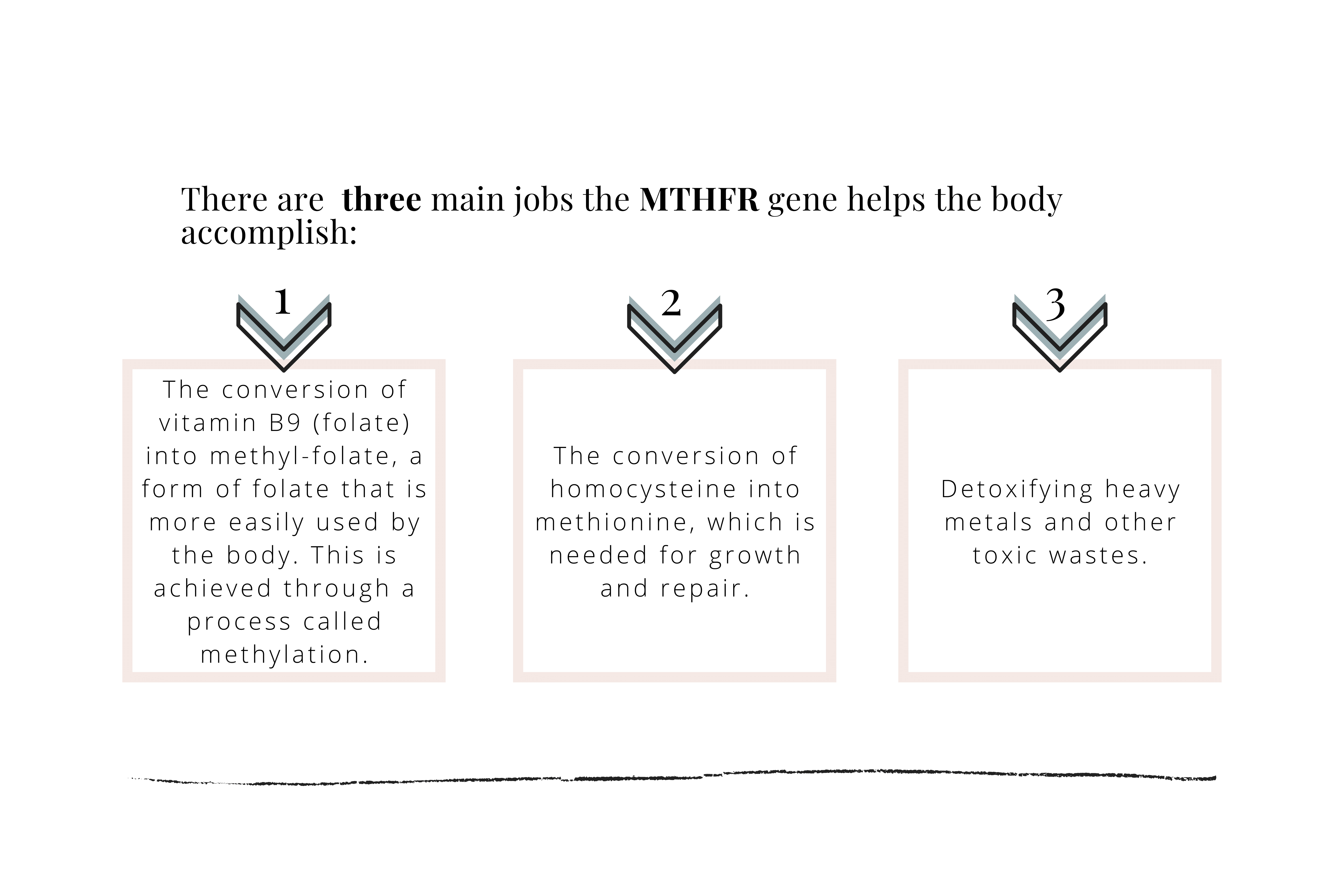
There are three main jobs the MTHFR gene helps the body accomplish:
The conversion of vitamin B9 (folate) into methyl-folate, a form of folate that is more easily used by the body. This is achieved through a process called methylation.
The conversion of homocysteine into methionine, which is needed for growth and repair.
Detoxifying heavy metals and other toxic wastes.
Some of us were born with a defective set of instructions in the form of an MTHFR gene mutation. Instead of the nice wardrobe we were expecting, we get something more like a few pieces of plywood hammered together. Our half-completed wardrobe works—just not as well as the complete version.
Unfortunately, there can be repercussions for living with an MTHFR mutation, including higher incidences of chronic disease.
What Is Methylation?
As I discussed earlier, the MTHFR gene uses the process of methylation to convert vitamin B9 (folate) into a form of folate that is more easily used by the body. But what exactly is methylation?
Methylation is the mechanism by which a methyl group is added to a compound.
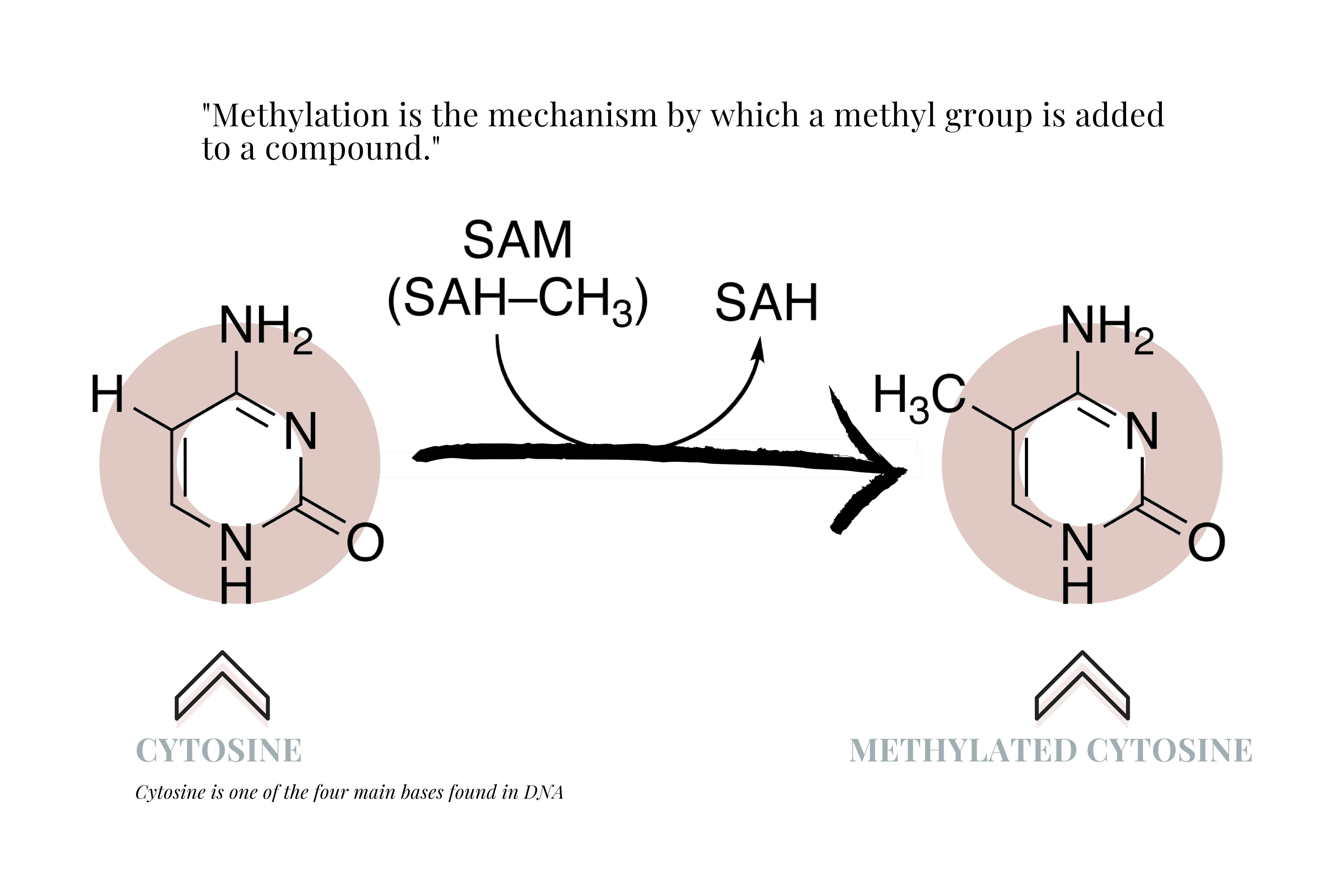
Now, this sounds like a basic process, but methylation is critical to many of the processes that we take for granted.
Methylation is involved in:
Fixing your cells, tissues, and DNA
Ensuring your genes get expressed and your proteins are working
Making chemicals that control your mood, sleep, and functioning of your brain
Keeping your homocysteine (a substance that causes inflammation) levels under control so that your blood vessels don’t get damaged
Controlling inflammation in your body
Helping your liver process fats
Controlling your immune system
Detoxifying your body by modifying heavy metals and toxins
So methylation is very important.
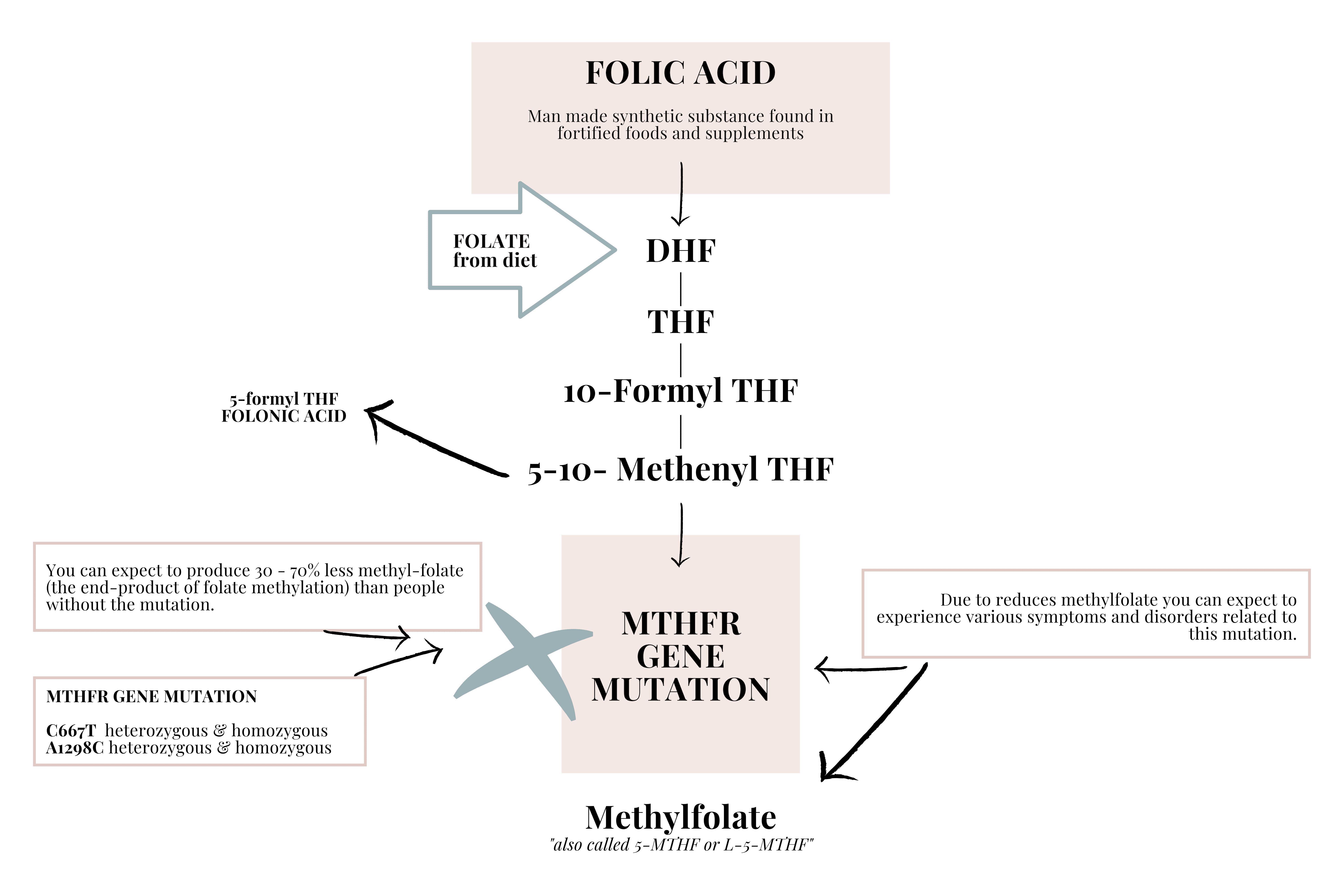
What does this mean if you have an MTHFR gene mutation? You can expect to produce 30–70% less methyl-folate (the end product of folate methylation) than people without the mutation. As a result, you can experience various symptoms and disorders related to this mutation.
What Are Some Symptoms of an MTHFR Gene Mutation?
Wondering if you possibly have an MTHFR gene mutation? Here are some common symptoms:
Elevated levels of homocysteine due to poor methylation
Folate deficiency: Symptoms include being very tired, feeling light-headed, and having trouble with your memory
Having had one or more miscarriages
Suffering from autoimmune diseases such as fibromyalgia and Hashimoto’s (hypothyroidism)
Having longstanding digestive issues or IBS
Having a long history of depression or anxiety
How the MTHFR Gene Mutation Can Affect You
Research has shown the connection between the MTHFR mutation and a number of diseases.
Heart Disease
A study conducted by The American Heart Association discovered that subjects with two copies of the MTHFR mutation experienced an increased risk of coronary heart disease. The study’s authors concluded that higher circulating levels of homocysteine were contributing to arterial damage.
Stroke
The presence of an MTHFR mutation also resulted in an increased likelihood of stroke. In one study, subjects who experienced a stroke were 22% more likely to have had one or two copies of the mutated MTHFR gene than a group of control subjects.
Cancer
The MTHFR mutation has been linked with various cancers. In one study, depending on the type of MTHFR mutation they had, premenopausal women’s chances of getting breast cancer increased by 1.9–4.5 times.
Mental Illness
The British Women’s Heart and Health Study found an increased risk of depression among women with the MTHFR mutation. Other mental health conditions linked with the MTHFR mutation include bipolar disorder and schizophrenia.
In particular, anxiety and depression are linked with homozygous mutations of 677T MTHFR genes. In one study, women with the MTHFR mutation were up to 2 times more likely to suffer from depression.
Gut Health
In addition, the presence of an MTHFR mutation has been linked with various gut disorders such as ulcerative colitis and Crohn’s disease. In one study, patients with either ulcerative colitis or Crohn’s disease were more than twice as likely to have an MTHFR mutation as those without these disorders. And yet another study found a link between the presence of an MTHFR mutation and colon cancer.
Other Conditions
Parkinson’s disease
Alzheimer’s disease
Dementia
High blood pressure
Preeclampsia (high blood pressure during pregnancy)
Glaucoma
Recurrent miscarriages

Getting Tested for MTHFR
Although the previous information may have sounded a bit scary, it doesn’t need to be. Getting tested for the MTHFR gene mutation is the first step you need to take to determine how to keep your body healthy.
Getting tested will allow you to learn whether you have a mutation or not and what type of mutation you have.
Although there are many variations of the MTHFR mutation, the main three are:
Heterozygous Mutation: This is the most common and least severe of the MTHFR mutations. You have one normal MTHFR gene and one mutated gene.
Homozygous Mutation: A homozygous mutation means you’ll have two mutated genes in either the 677 or 1298 position (but not both).
Compound Heterozygous Mutation: This mutation is more severe. You’ll have one mutation at the 677 position on one gene and a mutation at the 1298 position on another gene.

I Have the Mutation, Now What?
Maybe your test results came back positive for the MTHFR gene mutation, and you’re starting to panic.
Calm down, because up to 60% of the population does too, so you’re in good company. And just because you’re at a higher risk for getting a disease than someone without the mutation, it doesn’t mean it’s your destiny to become sick.
Although you can’t change your DNA, there’s still a lot you can do to compensate for your under-functioning gene.

What Is the MTHFR Diet?
The MTHFR diet is a diet that will boost your folate levels. The more folate you have in your diet, the more chances you have of creating the active form of folate—the form of folate that your body can more easily use.
To get the highest value per serve, choose the following food sources of folate:
Chickpeas: One 100-gram serving provides 43% of your daily requirements
Beans: One 100-gram serving provides 43% of your daily requirements
Asparagus: One 100-gram serving provides 37% of your daily requirements
Spinach: One 100-gram serving provides 37% of your daily requirements
Romaine lettuce: One 100-gram serving provides 34% of your daily requirements
Artichokes: One 100-gram serving provides 30% of your daily requirements
Rocket/arugula: One 100-gram serving provides 24% of your daily requirements

Aside from folate, you will also want to consume other B vitamins such as vitamin B2 (riboflavin) and vitamin B6 (pyridoxine), as they are helpful in converting folate into the active form of folate.
You can increase your vitamin B2 intake by choosing the following food sources:
Almonds, feta cheese, beef, mackerel, lamb, duck
To optimise your vitamin B6 intake, choose the following food sources:
Pistachio nuts, salmon, turkey, pork, hazelnuts, walnuts
When increasing your folate intake, you should also increase your vitamin B12 intake:
Atlantic herring, wild rainbow trout, sockeye salmon, beef, eggs
Book Your Free Evaluation Call

Your MTHFR Support Needs a Healthy Gut – But Is Yours Functioning?
You’re taking methyl-folate, B12, and methylation support supplements—but your symptoms haven’t improved. That’s because your gut bacteria produce the B vitamins you need for methylation.
Our AIM Method tests gut health alongside MTHFR genetics to identify whether bacterial imbalances, dysbiosis, or gut inflammation are undermining your methylation support.
We don’t just recommend MTHFR supplements. We identify whether YOUR gut can produce and absorb the B vitamins needed to compensate for your mutation.
Book Your Free Evaluation Call
Are There Any Other Dietary Tips I Should Follow?
Yes. Aside from boosting your intake of the B vitamins listed above, you need to control the levels of homocysteine in your body. Because of the MTHFR gene mutation, your body cannot keep your homocysteine levels under control. This leads to a build-up of homocysteine in your blood, which increases your risk of heart disease.
As a result, you need to control your homocysteine levels through diet.
You can do so by:
Not eating too much animal protein: Animal protein contains a lot of methionine, which your body converts into homocysteine
Drinking bone broth: This helps balance your methionine with proline and glycine
Keeping your blood glucose under control: The higher your blood sugar, the higher your levels of homocysteine
Not drinking too much caffeine: Caffeine is thought to increase the levels of homocysteine in your blood by working to suppress vitamin B6
Eliminating alcohol: Chronic alcohol use is linked with increased homocysteine in the blood
Consuming more fruits and vegetables: Fruit and vegetable consumption has been shown to decrease homocysteine levels
Avoiding processed foods: Processed foods such as potato chips contain acrylamide, which has been shown to increase homocysteine
Lifestyle Modifications
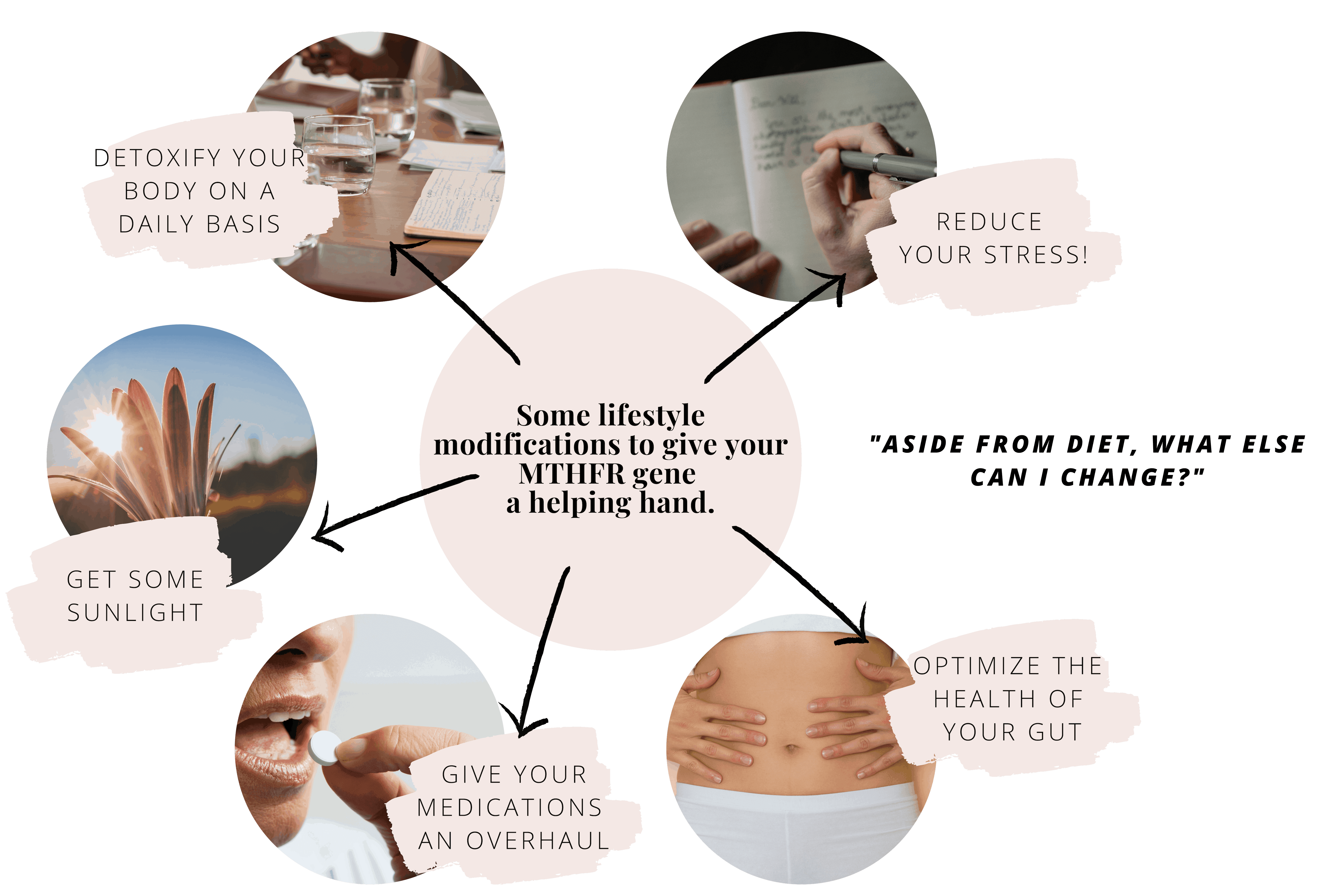
Aside from Diet, What Else Can I Change?
Below are some lifestyle modifications you can implement:
Reduce Your Stress
Are you always stressed? Chronic stress can diminish your B vitamins and cause your symptoms to be more obvious. You can reduce your stress by performing activities such as deep breathing, positive visualisation, spending time in the sun and in nature, keeping a gratitude journal, and laughing more.
Detoxify Your Body on a Daily Basis
With an MTHFR gene mutation, you naturally have a harder time getting rid of toxins. If you don’t get rid of toxins on a continual basis, this can lead to a variety of issues. As a result, you should detoxify your body on a daily basis by performing activities such as fasting, sweating, drinking lots of fluids, and reducing your exposure to environmental toxins.
Get Some Sunlight
Sunlight is good for your brain and helps control your blood sugar—factors that can keep your symptoms in check. Some tips for healthy sun exposure include exposing enough of your skin, not looking directly at the sun, and limiting your exposure to 20 minutes to start with.
Give Your Medications an Overhaul
A number of health professionals believe antacids, various blood pressure medications, metformin (a drug used to control type 2 diabetes), and many contraceptives may decrease the absorption of B vitamins.
Optimise the Health of Your Gut
MTHFR mutation expert Dr Ben Lynch believes that one of the first things you should do when you discover that you have this gene mutation is to optimise the function of your gut.
This could involve adopting a wholefood diet along with probiotic-rich foods and targeted interventions to bring your digestive system back into balance.
Read more: How to Improve Gut Health Naturally: The Ultimate Guide
When MTHFR Supplements Alone Aren’t Enough:
Why Gut Health Matters
You’ve tested positive for an MTHFR mutation. You’re taking methyl-folate, B12, B2, B6, and other methylation support supplements. Maybe you’ve changed your diet to include more folate-rich foods, reduced animal protein, eliminated alcohol and caffeine.
But your symptoms haven’t improved. You still have chronic fatigue, brain fog, anxiety, elevated homocysteine, or digestive issues.
Here’s what you need to understand: MTHFR supplements can be helpful—but only if your gut can produce and absorb the B vitamins needed to support methylation.
Why MTHFR Supplements Alone Aren’t Always Enough:
1. Your Gut Bacteria Aren’t Producing B Vitamins
Your gut bacteria produce folate (B9), B12, B2, and other B vitamins essential for methylation. If you have gut dysbiosis with depleted Bifidobacterium and Lactobacillus species (the primary folate producers), you’re not producing enough B vitamins internally—even if you’re eating folate-rich foods or taking supplements.
If your beneficial bacteria are severely depleted, supplementing methyl-folate provides external support—but doesn’t address the underlying bacterial imbalances that should be producing these vitamins for you.
2. Gut Inflammation Is Impairing B Vitamin Absorption
If you have elevated Proteobacteria (Klebsiella, Proteus, Escherichia) producing inflammatory LPS, or depleted Faecalibacterium prausnitzii (butyrate producer critical for gut barrier integrity), your gut barrier is likely compromised.
This means you can’t absorb B vitamins effectively—even from high-quality supplements. You’re taking methyl-folate and B12, but your inflamed gut isn’t absorbing them properly.
3. Gut Dysbiosis Is Increasing Homocysteine Levels
Certain bacterial imbalances increase homocysteine production or impair homocysteine metabolism. If you have gut dysbiosis, you’re fighting an uphill battle—your MTHFR mutation already reduces homocysteine conversion, and your gut bacteria are making it worse.
Supplementing B vitamins might lower homocysteine slightly, but if gut dysbiosis is contributing to elevated homocysteine, you need to address bacterial imbalances.
4. Low Diversity Means You’re Missing Methylation Support
If your diversity score is in the 200–400 range (healthy guts typically have 600+ species), you’re missing hundreds of bacterial species that produce B vitamins, support detoxification, and regulate inflammation—all critical for MTHFR function.
Generic probiotics provide 5–10 species. That’s not enough to rebuild diversity when you’re missing hundreds of species that support methylation.
5. You Don’t Know Which Bacterial Imbalances You Have
Taking methyl-folate and B12 supplements without knowing your gut bacterial balance means you’re guessing. Are you depleted in Bifidobacterium (folate producer)? Faecalibacterium (butyrate for gut barrier)? Do you have elevated Proteobacteria (inflammatory)?
Without testing, you don’t know whether gut dysbiosis is undermining your MTHFR support.
What Testing Reveals
When Victoria reviews comprehensive metagenomic test results for clients with MTHFR mutations, she identifies:
Which beneficial bacteria are depleted (Bifidobacterium, Lactobacillus, Faecalibacterium—B vitamin producers and gut barrier support)
Which pathogenic bacteria are elevated (Klebsiella, Proteus, Escherichia—inflammatory, impair absorption)
Diversity scores (Are you in the 200s or 600s? How many B vitamin–producing species are you missing?)
Functional capacity (Is your microbiome producing B vitamins? Are inflammatory metabolites elevated?)
Gut barrier integrity markers (Is inflammation impairing B vitamin absorption?)
This information allows us to create a targeted protocol:
Rebuild beneficial bacteria that produce B vitamins (Bifidobacterium, Lactobacillus)
Reduce inflammatory bacteria impairing absorption (Proteobacteria)
Repair gut barrier if Faecalibacterium depleted (butyrate, L-glutamine, zinc carnosine)
Increase diversity to support methylation processes
THEN optimise MTHFR supplements once gut health restored
The Bottom Line
If you’ve been taking MTHFR supplements for 6–12 months and haven’t seen significant improvement in fatigue, brain fog, anxiety, or homocysteine levels—the problem isn’t that methyl-folate doesn’t work. It’s that your gut isn’t producing or absorbing the B vitamins needed to support methylation.
Testing gut health alongside MTHFR genetics shows exactly which bacterial imbalances are undermining your methylation support.
Book Your Free Evaluation Call
Stop Supplementing MTHFR Without Testing Your Gut
Your gut bacteria produce the B vitamins you need for methylation. If you have dysbiosis, depleted beneficial bacteria, or gut inflammation, MTHFR supplements won’t work as well.
Our AIM Method combines MTHFR genetic testing with comprehensive gut microbiome testing (reviewed by Victoria, our in-house microbiologist) to identify whether bacterial imbalances are undermining your methylation support.
We don’t just recommend methyl-folate supplements. We test whether YOUR gut can produce and absorb the B vitamins needed to compensate for your MTHFR mutation.
Book a free 15-minute evaluation call to discuss your symptoms and whether testing gut health alongside MTHFR genetics is right for you.
Book Your Free Evaluation Call
The Bottom Line
Testing for the MTHFR gene mutation is an excellent tool you can use to support your body and prevent chronic health conditions.
Although you can’t change your DNA, knowledge is power. You can use that knowledge to make dietary and lifestyle changes that will keep your body in top health now and into the future.
But don’t forget: your gut bacteria produce the B vitamins you need for methylation. If you have gut dysbiosis, depleted beneficial bacteria, or gut inflammation, MTHFR supplements alone won’t fully compensate for your mutation.
Testing gut health alongside MTHFR genetics reveals whether bacterial imbalances are undermining your methylation support.
Book Your Free Evaluation Call
Test Your Gut Health Alongside MTHFR Genetics
You’ve tested positive for an MTHFR mutation. You’re taking methyl-folate, B12, and methylation support supplements—but your symptoms haven’t improved.
At Prana Thrive, we test gut health alongside MTHFR genetics to identify whether bacterial imbalances are undermining your methylation support:
Analyse — Comprehensive metagenomic testing reveals your diversity score, which beneficial bacteria are depleted (Bifidobacterium, Lactobacillus, Faecalibacterium—B vitamin producers and gut barrier support), which pathogenic bacteria are elevated (Klebsiella, Proteus—inflammatory, impair absorption), and functional capacity (Is your microbiome producing B vitamins? Are inflammatory metabolites elevated?). Reviewed by Victoria (our in-house microbiologist) and Amanda (after analysing over 2,000 microbiome tests).
Integrate — A personalised protocol designed to restore gut health and support MTHFR function. If testing shows depleted Bifidobacterium (folate producer), we rebuild these species. If Proteobacteria elevated (impairs absorption), we reduce inflammation and repair gut barrier. If diversity low, we increase B vitamin–producing species. Not generic MTHFR supplements—targeted gut health protocols that support methylation.
Monitor — Ongoing support with regular check-ins, protocol adjustments, and retesting to ensure your beneficial bacteria are rebuilding, B vitamin production is increasing, and gut barrier integrity is restored. We track your progress for 3–6 months until your MTHFR symptoms improve.
This isn’t just MTHFR supplementation. It’s addressing the gut imbalances that undermine methylation.
We’ve helped over 2,000 clients restore their health by identifying which bacterial species support MTHFR function—not by recommending generic methyl-folate supplements.
Book a free 15-minute evaluation call to discuss your symptoms, MTHFR mutation status, and whether testing gut health alongside genetics is right for you.
We work with a limited number of clients each month to ensure everyone receives personalised attention. If you’re ready to stop guessing why MTHFR supplements aren’t working and get real answers about YOUR gut health, book your call now.
Book Your Free Evaluation Call
No pressure. No obligation. Just clarity on whether gut dysbiosis is undermining your MTHFR support.
Q: Should I get tested for MTHFR?
A: If you have chronic fatigue, brain fog, anxiety, depression, elevated homocysteine, digestive issues (IBS, ulcerative colitis, Crohn's disease), autoimmune conditions, or recurrent miscarriages, MTHFR testing can provide valuable information. However, testing MTHFR genetics alone doesn't reveal whether your gut can produce and absorb the B vitamins needed for methylation. We recommend testing gut health alongside MTHFR genetics to identify whether bacterial imbalances are undermining your methylation support.
Q: I'm already taking methyl-folate and B12—why aren't my symptoms improving?
A: If you're taking MTHFR supplements but still have symptoms, your gut bacteria might not be producing enough B vitamins internally, or your gut inflammation might be impairing B vitamin absorption. Gut bacteria (Bifidobacterium, Lactobacillus) produce folate and B vitamins essential for methylation. If these species are depleted, or if you have elevated inflammatory bacteria (Proteobacteria) impairing absorption, supplementation alone won't fully compensate for your MTHFR mutation. Testing gut health reveals whether bacterial imbalances are undermining your supplements.
Q: How does gut health affect MTHFR function?
A: Your gut bacteria produce folate (B9), B12, B2, and other B vitamins essential for methylation. If you have gut dysbiosis with depleted beneficial bacteria, you're not producing enough B vitamins internally. Gut inflammation from elevated Proteobacteria or depleted Faecalibacterium (butyrate producer) impairs B vitamin absorption—even from supplements. Certain bacterial imbalances increase homocysteine production, worsening MTHFR symptoms. Low diversity means you're missing hundreds of bacterial species that support detoxification and methylation. Testing gut health identifies these imbalances.
Q: Can I fix MTHFR with diet alone?
A: Diet is important—eating folate-rich foods (chickpeas, beans, asparagus, spinach), B vitamin sources, and controlling homocysteine through reduced animal protein, eliminated alcohol/caffeine, and increased fruits/vegetables all help. However, if you have gut dysbiosis, depleted beneficial bacteria that produce B vitamins, or gut inflammation impairing absorption, dietary changes alone may not fully compensate for your MTHFR mutation. Testing gut health reveals whether bacterial imbalances need to be addressed alongside dietary changes.
Q: Do I need to take methyl-folate forever?
A: Not necessarily. If you restore gut health—rebuilding beneficial bacteria that produce B vitamins (Bifidobacterium, Lactobacillus), reducing inflammatory bacteria that impair absorption, increasing diversity—your gut can produce more B vitamins internally. Some clients with MTHFR mutations are able to reduce or eliminate methyl-folate supplementation once gut health is restored, because their gut bacteria are producing the folate needed to compensate for their mutation. Testing gut health before and after interventions shows whether your microbiome is supporting methylation.
Q: What's the connection between MTHFR and IBS/Crohn's/ulcerative colitis?
A: Research shows MTHFR mutations are more common in people with IBS, Crohn's disease, and ulcerative colitis. The connection is bidirectional: MTHFR mutations may increase susceptibility to gut inflammation, and gut inflammation impairs B vitamin production and absorption—worsening MTHFR symptoms. If you have both an MTHFR mutation and digestive issues, testing gut health identifies which bacterial imbalances are present (dysbiosis, depleted beneficial species, elevated inflammatory bacteria) and allows for targeted interventions that address both conditions.
Q: Can stress affect MTHFR function?
A: Yes—chronic stress depletes B vitamins and can worsen MTHFR symptoms. Stress also affects gut health by altering gut bacteria composition, increasing intestinal permeability, and impairing B vitamin absorption. If you have an MTHFR mutation and chronic stress, you need stress management interventions (deep breathing, meditation, nature exposure) alongside gut health support and MTHFR supplementation. Testing gut health reveals whether stress-related bacterial changes are present.
Q: Should I test my children for MTHFR?
A: If you have an MTHFR mutation and your children have symptoms (chronic fatigue, brain fog, digestive issues, recurrent infections, mood issues), testing can provide valuable information. However, for children, we prioritise gut health optimisation first—ensuring beneficial bacteria are thriving, diversity is high, and inflammation is controlled. If gut health is optimised and symptoms persist, MTHFR testing alongside continued gut health monitoring can guide targeted interventions. Book an evaluation call to discuss your children's symptoms and whether testing is appropriate.