Understanding Gut Microbiome Testing
A Key Component of Our Gut Health Programs


Author:
Amanda Ledwith, BHSc Naturopathy
Last Updated:
Reading Time:
XX mins
Categories:
Gut Health
gut-microbiome-testing
What You'll Learn
Gut microbiome testing identifies which bacteria, fungi, and other microorganisms are in your gut—revealing imbalances that may be contributing to digestive issues, autoimmune conditions, and mood disorders.
Advanced testing methods in Australia:
16S rRNA sequencing (NGS): Identifies and quantifies gut microbial species with high accuracy
Shotgun metagenomic sequencing: Comprehensive snapshot including non-rRNA organisms like fungi, functional information, and antibiotic resistance genes
What comprehensive testing reveals:
Overall diversity (200–800+ bacterial species on average)
Balance across phyla (large microbiome groups)
Beneficial bacterial levels (Akkermansia, Lactobacillus, Bifidobacterium, Faecalibacterium)
Troublemaker bacterial levels (opportunistic pathogens)
Inflammatory markers and metagenomic data (SCFAs, vitamins, harmful metabolites like LPS)
Why testing matters:
Identifies root causes conventional pathology testing misses
Guides targeted interventions (not generic protocols)
Tracks progress with retesting at 3–6 months
Every test workshopped with Amanda and Victoria to assess diversity, dysbiosis patterns, beneficial/troublemaker bacteria levels, and metagenomic markers—then used to build personalised treatment plans.
Have you found yourself struggling with persistent digestive issues despite trying various remedies?
From dietary changes to supplements, you’ve explored numerous avenues, yet the discomfort persists.
You’re not alone in this struggle.
Digestive concerns are increasingly common, affecting millions worldwide. Whether it’s bloating, irregular bowel movements, or unexplained discomfort, these issues can significantly impact your quality of life.
But what if there’s more to the story than just dietary choices and lifestyle factors?
What if the key to unlocking your digestive health lies within your gut microbiome?
Welcome to our world of gut microbiome testing, a revolutionary approach we use every day that goes beyond conventional gut health diet advice.
In this article, we’ll delve into the significance of gut microbiome testing and its pivotal role in personalised health programs.
We will:
Explore the science behind PCR vs. culture techniques
Unravel examples of advanced testing methods used in Australia
Discover how our naturopaths harness this technology to tailor effective treatment plans
If you’re ready to uncover the best tool we know of to establish the root cause of your digestive woes, read on.
Because when it comes to your wellbeing, knowing your unique microbiome numbers makes all the difference.
The Significance of Gut Microbiome Testing

Research has shown that an imbalance in the gut microbiome, known as dysbiosis, is linked to a myriad of health issues, including digestive disorders, autoimmune conditions, and even mood disorders like depression and anxiety.
Gut microbiome testing offers experienced practitioners a deeper insight into the root cause of these issues—the gut microbiome imbalances.
By analysing the composition of your gut microbiome, we use microbiome testing to identify specific bacterial groups and species that may be contributing to your symptoms.
In many cases, we find abnormalities that conventional pathology testing misses.
The two most common methods used in gut microbiome testing are PCR (Polymerase Chain Reaction) and culture techniques.
While culture techniques have traditionally been used to identify specific bacteria and are still used by a number of testing companies, PCR results offer a more comprehensive and accurate assessment of microbial communities.
In the next section, we’ll delve into the differences between PCR and culture techniques, shedding light on why PCR is often preferred in modern microbiome testing.
PCR vs. Culture Techniques: Understanding the Difference
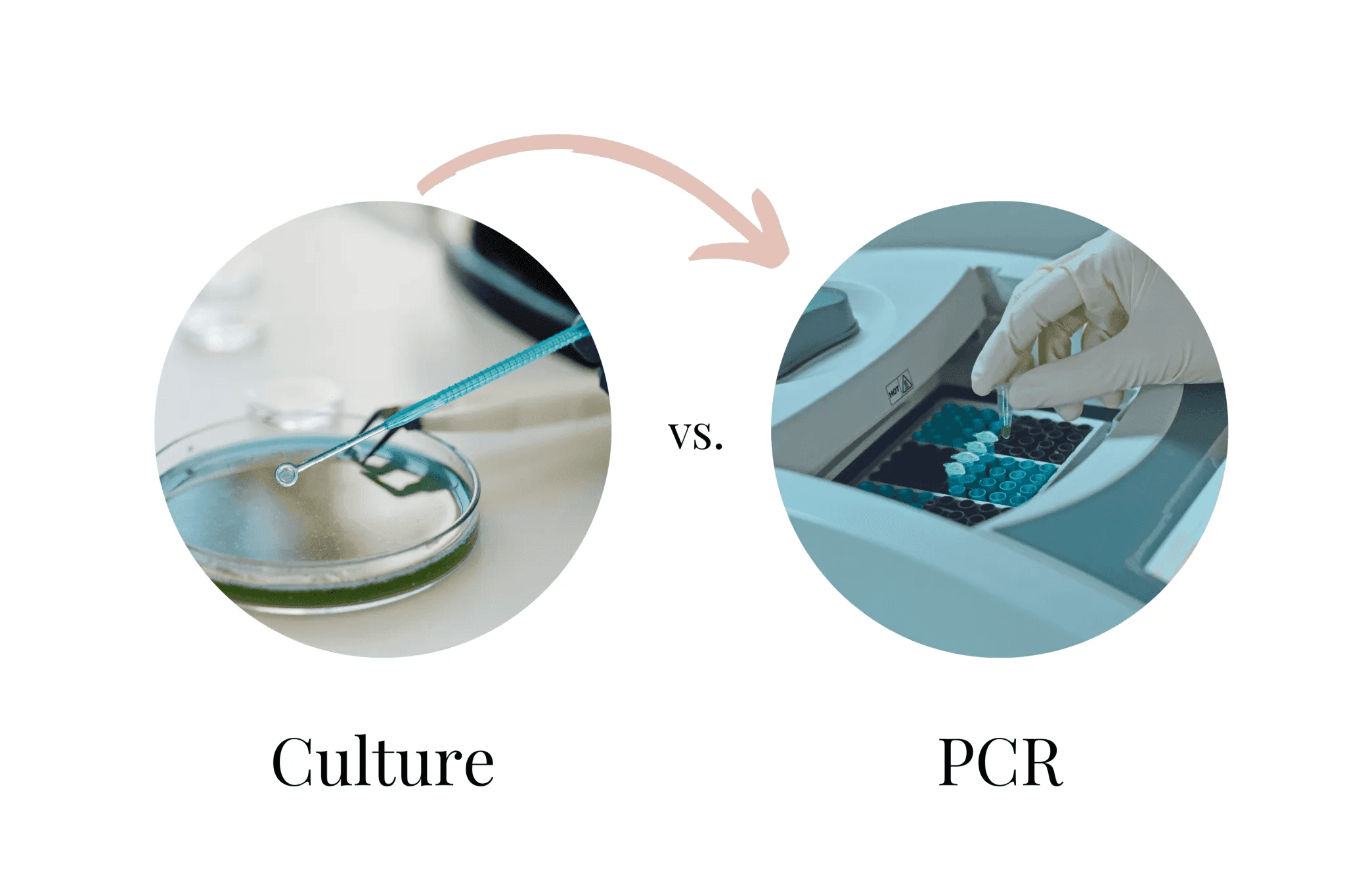
While both commonly used testing methods have their merits, they also come with their own set of limitations.
Traditionally, culture techniques were the go-to method for identifying bacteria in the gut. This approach focuses on finding a specific list of pathogens. It requires that a handful of petri dishes are inoculated with stool sample and grown in a lab incubator to mimic human body conditions, 37℃ and a little humid.
Because of this, culture techniques have inherent limitations.
Culture Limitations
Firstly, culture techniques only capture a fraction of the microbial diversity present in the gut.
Culture primarily focuses on bacteria that can survive aerobic conditions (meaning normal oxygen-rich air) than strict anaerobic bacteria (oxygen kills them). Anaerobic bacteria make up the vast majority of the gut microbiome.
Culture generally favours fast-growing bacteria, missing many slower-growing or fastidious (different growth requirement) species that play crucial roles in gut health.
Culture plates are often overgrown by certain species, either swarming bacteria like Proteus or by fast-growing E. coli. e.g., E. coli in a PCR-based microbiome test would typically represent between 0.1–1% of the microbiome. On an overgrown culture plate this can look like 80% or 4+ growth.
While culture can be useful in some circumstances, it doesn’t accurately describe the complex community present within the gut microbiome, and results in a false representation of gut diversity.
In contrast, PCR offers a more comprehensive and accurate approach. It is a molecular biology technique meaning it amplifies specific DNA sequences from the microbial species present in your stool sample.
This allows for the detection and community profiling of a massive range of bacteria, fungi, and other microorganisms compared with culture.
PCR Advantages
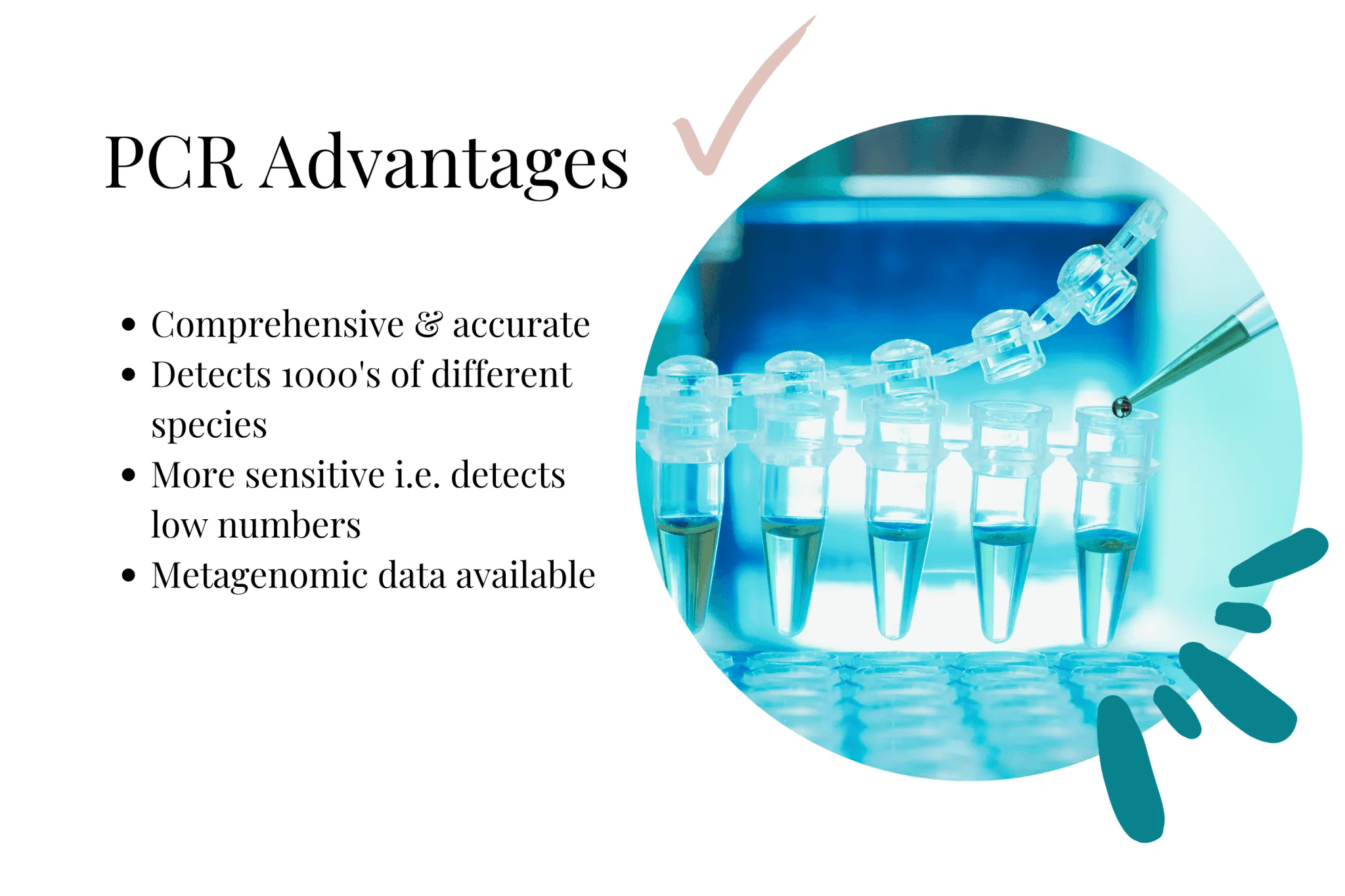
PCR is not limited by the need for bacterial growth in culture, making it ideal for capturing the true microbial diversity within each individual gut sample.
As a guide, typical PCR-based microbiome reports we receive describe, on average, between 200–800 bacterial species. The report lists every single species and strain of those 800-odd bacteria.
And many of these species account for as little as 0.003% of the microbiome.
We also see a typical high diversity profile averaging no more than 4–5% of the microbiome being represented by a single strain.
These results are very different than culture results which give relative quantities like 2+ and/or ‘present’ or ‘absent’.
We can see and identify specific bacterial strains that need to be higher, and those that are taking over.
We also receive impact insights into metagenomic data—pathways in the body that bacterial genes represent. This includes Short Chain Fatty Acids (SCFAs), vitamin groups, harmful metabolites like lipopolysaccharide (LPS) and more.
In addition to the bacterial numbers, this information is invaluable for pinpointing deeper imbalances and guiding targeted interventions to restore gut health.
In the next section, we’ll explore examples of advanced gut microbiome testing methods used in Australia, shedding light on the innovative approaches available for assessing gut health.
Examples of Gut Microbiome Testing Methods Used in Australia

In Australia, gut microbiome testing uses two prominent methods:
Advanced throughput sequencing, also known as next-generation sequencing (NGS), allows the simultaneous sequencing of millions of DNA fragments. Using advanced targeted bioinformatics techniques 16s rRNA gene-sequencing enables labs to very accurately identify and quantify gut microbial species present in a sample using known DNA fragments.
Shotgun metagenomic sequencing involves sequencing all DNA present in a sample, and provides a comprehensive snapshot of the entire community—including non-rRNA organisms like fungi. This method also investigates functional information from samples, such as the presence of antibiotic resistance genes and how species co-vary.
Both methods offer valuable insights into the gut microbiome, but they differ in their scope and applications. NGS provides high-resolution taxonomic data, making it ideal for studying microbial diversity and community composition.
On the other hand, shotgun metagenomic sequencing offers a wider view of the gut microbiome, including functional and genetic information.
How We Utilise Gut Microbiome Testing
Every gut health program our team runs includes gut microbiome testing.
Rather than guess what’s going on based on symptoms, we choose to find out exact numbers of the bacteria in your gut and target treatment plans accordingly.
We workshop every client report we receive, and go through the incredibly in-depth report, along with 2 supplementary reports.
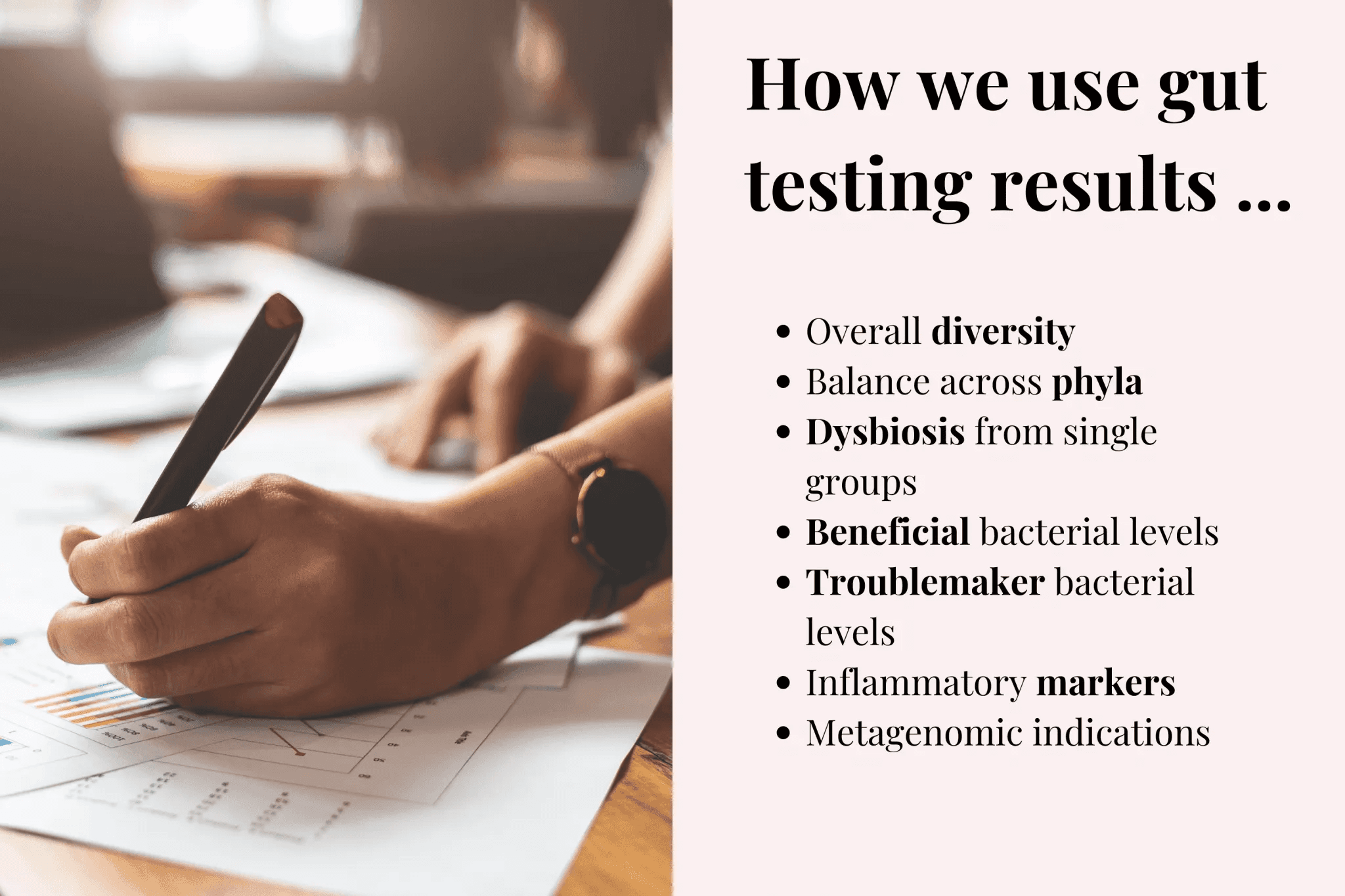
There are a number of areas we look at when assessing a report:
Overall diversity
Balance across phyla (large microbiome groups)
Dysbiosis from single species or groups
Beneficial bacterial levels (like Akkermansia, Lactobacillus, Bifidobacterium…)
Troublemaker bacterial levels
Inflammatory markers
And many many more metagenomic markers provided
All this is taken into consideration with your symptoms and history to build an accurate picture of what is going on. A targeted plan is then developed with naturopathic principles along with diet and lifestyle recommendations indicated by your report.
Book Your Free Evaluation Call

🔬 VICTORIA’S EXPERT INSIGHT
“After workshopping over 2,000 microbiome test reports with Amanda, I see consistent patterns that help us create targeted protocols.
When I review comprehensive test results, I’m looking beyond just which bacteria are present—I’m analysing functional capacity:
Is the microbiome producing beneficial metabolites? When I see depleted Faecalibacterium prausnitzii (our primary butyrate producer), I know gut barrier integrity is compromised—even if overall diversity looks reasonable. This guides specific interventions like butyrate supplementation and targeted prebiotics to rebuild this crucial species.
Are inflammatory metabolites elevated? When Proteobacteria levels are high (particularly Klebsiella or Proteus), I see elevated LPS production—driving systemic inflammation that explains why clients have symptoms beyond just digestion: brain fog, fatigue, skin issues, joint pain.
What about antibiotic resistance genes? Metagenomic testing reveals resistance patterns that inform which antimicrobials will actually work. If someone has elevated opportunistic bacteria with resistance to common herbal antimicrobials, we adjust the protocol accordingly—this is why some SIBO protocols fail.
The detail we get from comprehensive testing—down to 0.003% abundance for some species—allows us to identify subtle imbalances that standard pathology misses. It’s not just about diversity scores; it’s about understanding what your specific bacterial community is doing and how to shift it toward health.”
— Victoria, Microbiologist
Book Your Free Evaluation Call
Q: What's the difference between gut microbiome testing and a standard GP stool test?
A: Standard GP stool tests (available through Medicare) only detect known pathogens like Salmonella, Campylobacter, or Giardia—organisms that cause acute infections. Comprehensive microbiome testing identifies hundreds of bacterial species, assesses diversity, detects dysbiosis (bacterial imbalances), and provides functional capacity data (what your bacteria are producing: SCFAs, vitamins, inflammatory metabolites). If your GP stool test came back "normal" but you still have chronic digestive issues, comprehensive testing reveals imbalances standard pathology misses.
Q: How long does it take to get microbiome test results?
A: Typically 2–3 weeks from when the lab receives your sample. Comprehensive sequencing and bioinformatics analysis takes time to process the massive amount of data (200–800+ bacterial species, metagenomic markers, functional capacity insights). Once results are available, we workshop your report with Amanda and Victoria to create your personalised protocol.
Q: Do I need to prepare for the test in any special way?
A: No special preparation is required. We recommend collecting your sample while maintaining your current diet, supplements, and medications—we want to see your gut's current state. If you've recently taken antibiotics, we suggest waiting 4–6 weeks before testing, as antibiotics temporarily alter microbiome composition. Detailed instructions come with your testing kit.
Q: Is microbiome testing covered by Medicare or private health insurance?
A: Comprehensive microbiome testing is not covered by Medicare (which only covers basic pathology for detecting acute infections). Some private health insurers may provide partial rebates for naturopathic consultations under extras cover, but testing itself is typically not covered. The investment provides detailed insights that guide targeted protocols—not generic recommendations.
Q: How is microbiome testing different from food sensitivity testing?
A: Food sensitivity testing identifies immune reactions to specific foods. Microbiome testing identifies which bacteria are in your gut, which are depleted, which are elevated, and what they're producing. Often, food sensitivities are driven by gut dysbiosis—elevated bacteria producing inflammatory metabolites or depleted bacteria that should be breaking down certain food compounds. Testing your microbiome can reveal why you developed food sensitivities in the first place. If you're dealing with reactions to multiple foods, our Histamine Intolerance Specialist program may also be relevant.
Q: Will I need to retest after treatment?
A: Yes, we recommend retesting at 6 months to track progress. Microbiome testing isn't just a one-time snapshot—it's the foundation for monitoring how your bacterial community shifts with treatment. Retesting shows whether beneficial bacteria have rebuilt, problematic bacteria have reduced, diversity has increased, and functional capacity has improved. This allows us to adjust protocols based on measurable progress.
Q: What if I've already done microbiome testing through another company?
A: We can review your existing results if you'd like to share them. However, different testing companies use different methodologies (16S rRNA sequencing vs metagenomic sequencing vs culture), which affects what's detected and how results are reported. If you've had testing but still have unresolved symptoms, we may recommend comprehensive testing to ensure we're working with the most detailed picture of your gut microbiome. You can also read our article on DIY gut testing to understand the differences between at-home tests and professional testing.
Q: Can microbiome testing help if I don't have obvious digestive symptoms?
A: Yes. Gut microbiome imbalances are linked to conditions beyond digestion: skin issues (eczema, acne, rosacea), mood disorders (anxiety, depression, brain fog), autoimmune conditions, metabolic issues, and chronic fatigue. If you have any of these symptoms—even without obvious bloating or irregular bowels—testing can reveal bacterial imbalances driving systemic inflammation and contributing to your symptoms.